The South Korean automaker Hyundai Motors introduced the fourth-generation Hyundai Tucson on August 22, 2022. Due to declining sales, they discontinued it in November 2025. To revive the nameplate, now the carmaker is all set to launch the next-generation Hyundai Tucson with many upgrades.
This move aligns with Hyundai’s expanding electric and hybrid line-up, which recently saw the unveiling of the IONIQ 3.
Reportedly, its India launch may happen in late 2026; however, there’s no word regarding it from the officials. It is certain that it will be a little costlier than the model available for sale in India. The discounted one was available ex-showroom for ₹29.27 lakh to ₹36.04 lakh, so the next-gen may come with a price between ₹32 lakh and ₹40 lakh in the Indian market.
Abroad, it was recently spotted testing on public roads. The spy shots from the same reveal its interior; it is set to get a 17-inch Pleos infotainment system that will support wireless Android Auto and Apple. It is expected to be powered by an Android-based operating system that will feature a smartphone interface for smooth user experience.
Features a two-spoke steering wheel with four dots on it that is ‘H’ in Morse code. The leaked image clearly shows that it is quite thin compared to one that has already been discontinued in India. It even has physical buttons to ensure better practicality, and under the same, a small digital instrument cluster is also visible; it is tough to say anything about it, but it seems it is around 10 inches.
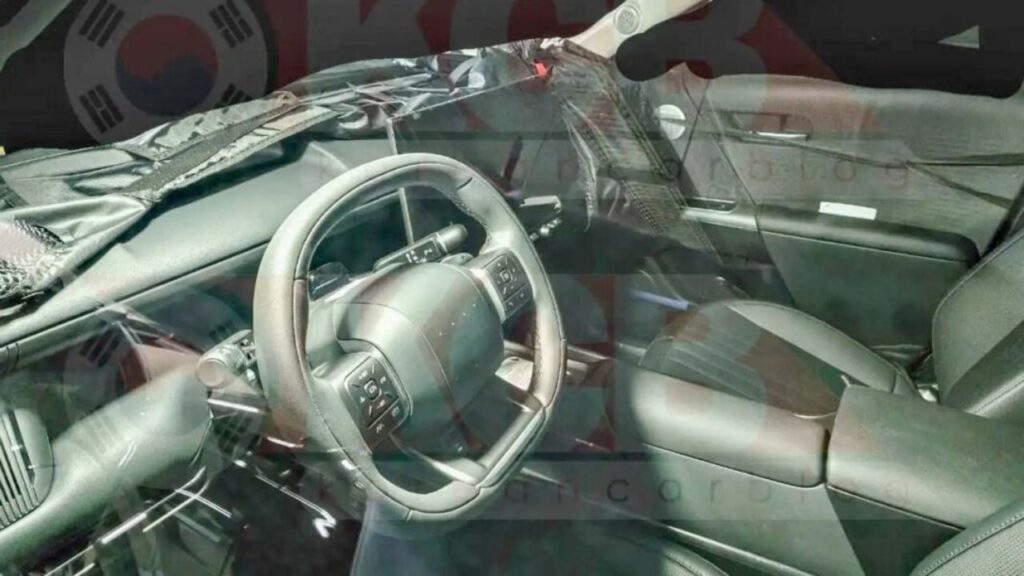
The carmaker has ensured the design of the steering wheel in a way that it doesn’t block the driver’s display visibility, so the user may see all driving details clearly. The cabin’s front end also has driver monitoring cameras, which clearly indicate that the car is set to be equipped with Level 2.5 ADAS (advanced driving assistance system).
The spy shots of the interior even indicate that the seats are made up of extensive soft-touch dashboard materials to endure better for all, not only the driver, and the trims that are used on the door also seem premium. Near the co-driver, a button for Boss mode is clearly visible; it helps the rear-seating passenger adjust the front passenger seat from the back.
There’s no confirmation that it has the same dimensions or has changed; many reports say that it will be slightly longer, wider and higher. It is certain that there will be no changes in the seating layout, and it will come with a seating capacity of 5 people in a configuration of 2-3. However, boot space is expected to be slightly more than the old one’s 540 litres and can be anticipated to be around 600 litres.
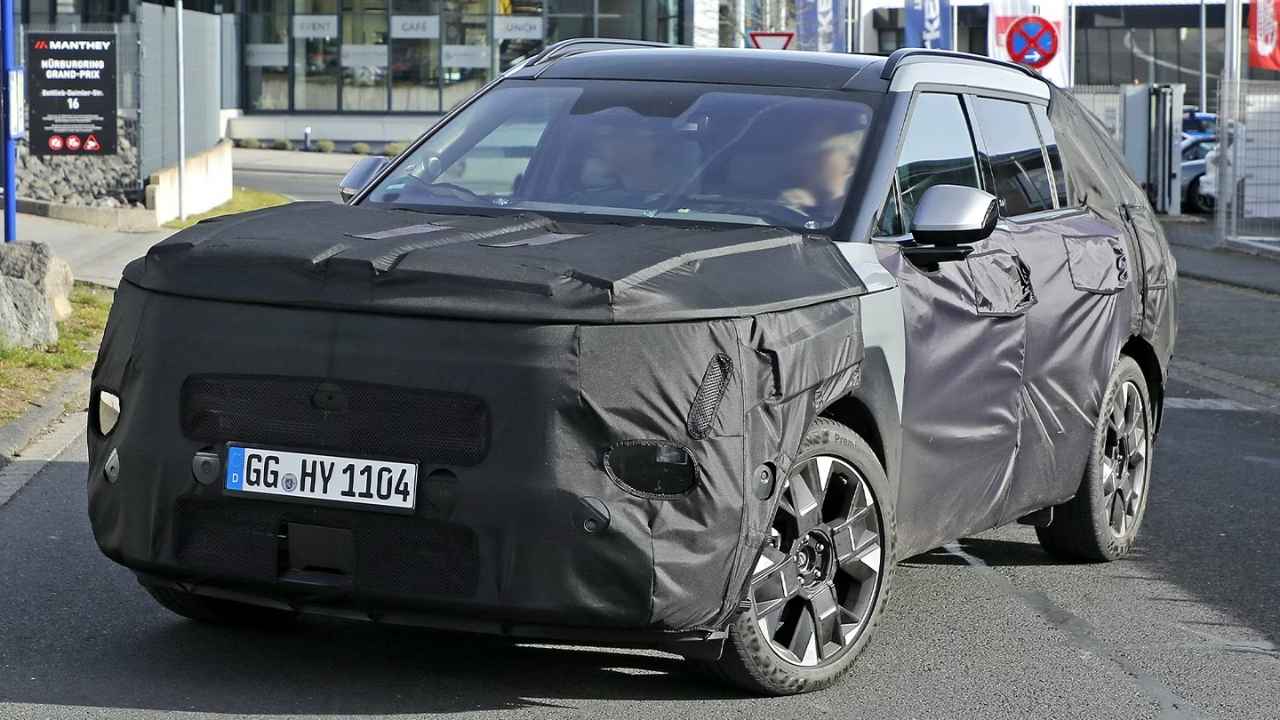
Although it isn’t the first time the next-gen Hyundai Tucson has been spotted testing, it has already happened many times. In the event of multiple sightings, we also have many details about its exterior and design.
The spy shots show that its front end has an upright and wide stance, vertical LED DRL signature, low-mounted headlamps, a flat and high-set bonnet, and a chunky bumper; its side features an overall body silhouette, flush-type door handles, new ORVMs, roof-mounted rails, and five-spoke 20-inch alloy wheels; and its rear has full-width LED taillights, a chunky bumper, and a simple tailgate.
Notably, it is internally codenamed as NX5. Many reports say that it is set to be based on Hyundai’s next-generation TMED-II hybrid system.
Its launch in the Indian market is expected to happen as both HEV and PHEV; the difference between them is that the former gets a very small LFP battery that charges itself automatically, but the latter needs to be plugged in.
The plug-in hybrid vehicle may get an LFP battery pack of around 18-19 kWh that will give only an electric range of 100 kilometres on the NEDC cycle, and overall, it is expected to be more than 800 kilometres.