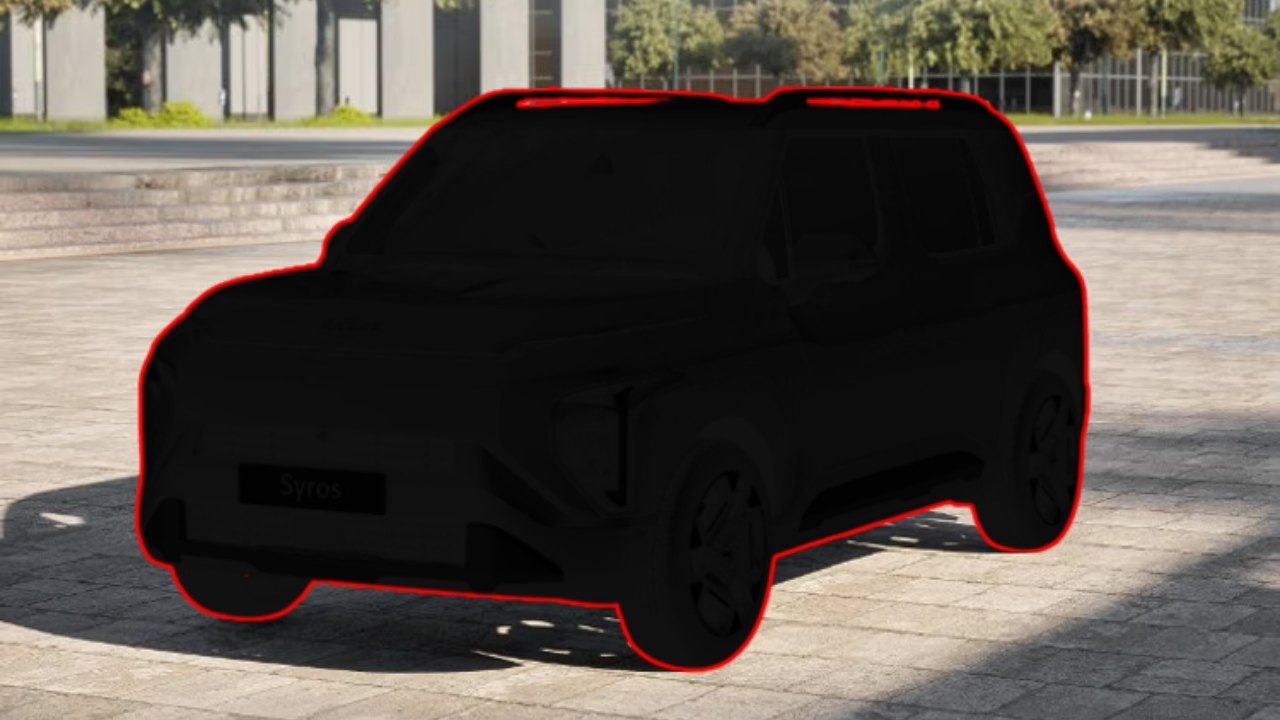
The South Korean automobile manufacturer Kia Motors is all set to launch the Syros EV in the Indian market. They haven’t confirmed any date officially; however, reports say that the launch will happen in August 2026, meaning it will debut in India a few weeks from now.
It is set to be the most affordable Kia electric vehicle in India, as its ex-showroom price is expected to be 14-20 lakh rupees, depending on the variant. Once launched, it will compete with the Nexon EV from Tata Motors and the XUV 3XO EV from Mahindra & Mahindra.
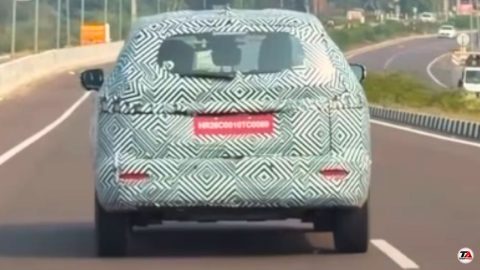
Like its rivals, the Syros EV is also an electric vehicle that is based on its ICE (internal combustion engine) counterpart. The car has already been spotted testing on public roads multiple times, being heavily camouflaged, with spy shots indicating that its exterior is slightly different from the ICE variant.
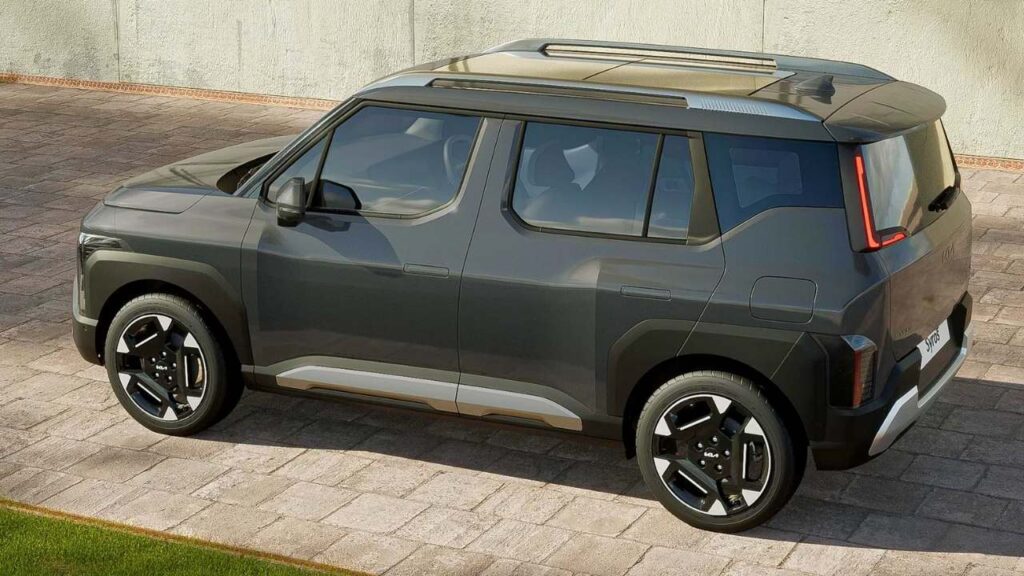
Since even the EVs don’t need as much cooling as ICE vehicles, it is certain that it will feature a closed-off grille but with modern styling. The LED headlights and other elements of the front fascia are expected to remain the same with a few tweaks.
In profile, no changes are expected compared to the ICE variant; it will retain flush-type door handles and large alloy wheels, maybe with a more aerodynamic design. To ensure better efficiency, the sides will feature a clear body for better aerodynamics.
In terms of size, the Syros EV is set to be the same as the ICE powertrain. Dimensionally, it will measure 3,995 mm in length, 1,805 mm in width and 1,680 mm in height. Its wheelbase and ground clearance are set to remain 2,550 mm and 180 mm, respectively.
Launch will happen with a seating capacity of five people in a layout of 2-3; its wheelbase has a boot of 2,550 mm, as the floor in the EV is set to be totally flat. Even though there’s no change in size, it is likely to have a slightly larger boot space compared to 465 litres.
The dashboard is more likely to be the same as its ICE variant, which is equipped with three screens: two 12.3-inch ones as an infotainment system and digital instrument cluster and one 5.5-inch display for climate control. Its infotainment system supports wireless Android Auto & Apple CarPlay, connected tech features, OTA updates, and voice command.
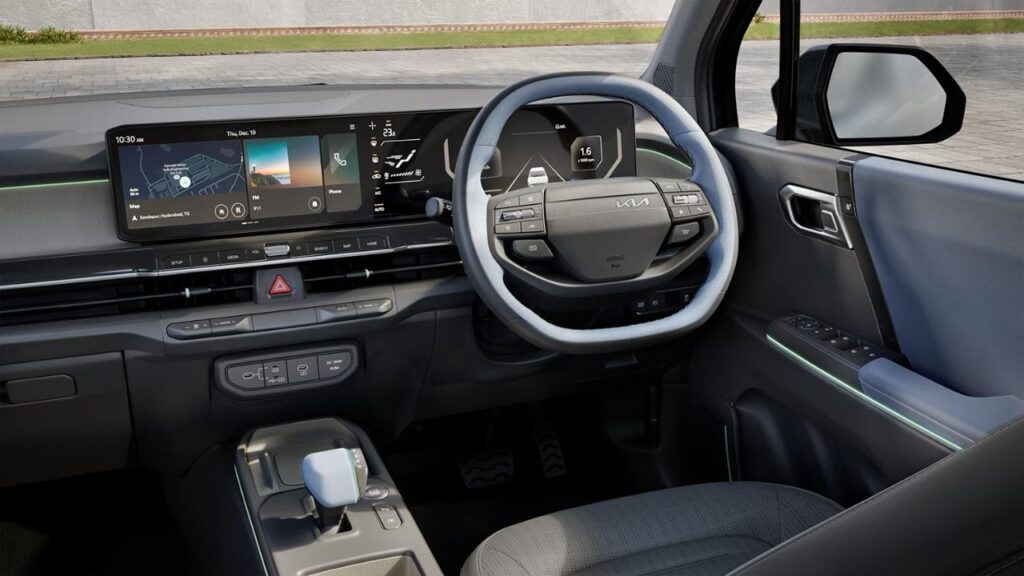
Same as the ICE counterpart, the all-electric variant is expected to come with front ventilated seats and a four-way adjustable driver’s seat, and rear seats are also likely to retain ventilation, sliding, and reclining features with an armrest and cup holders.
The top trim is expected to come with a Level 2 advanced driving assistant system, 6 airbags, 64-colour ambient light, a wireless phone charging pad, rear AC vents, an air purifier, a powered sunroof with UV and heat protection, and automatic climate control.
Let’s move to the most important specification, its powertrain and performance; the carmaker hasn’t yet said even a word about it. All we know is that it is also built on the K1 platform and its electrical architecture is 400-volt, meaning it may support quite fast DC chargers.
Reportedly, it will get a PMS motor on the front axle featuring a front-wheel-drive setup and use the single-speed automatic transmission. The motor’s power output and peak torque are pending; they will be revealed with the launch of the vehicle.
The Inster EV from Hyundai Motors is also built on the K1 platform, which is offered with two LFP batteries, 42 kWh and 49 kWh, so it is anticipated that the upcoming Syros EV will also come with these options.