The Japanese automaker Nissan Motor is most likely to launch the Terrano, a plug-in hybrid body-on-frame SUV. Its concept was unveiled at the 2026 Beijing Motor Show; reportedly, the carmaker is set to introduce the production model within 12 months.
This move follows Nissan’s strategy to strengthen its off-road lineup, similar to the recently confirmed comeback of the Nissan Xterra. The model may make its debut in the second half of 2027.
Exterior & Design
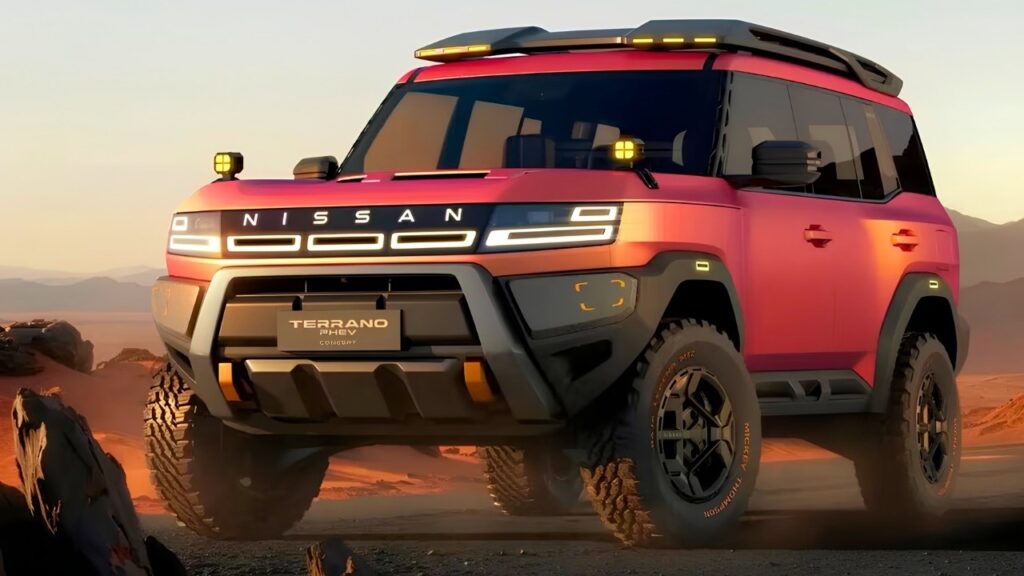
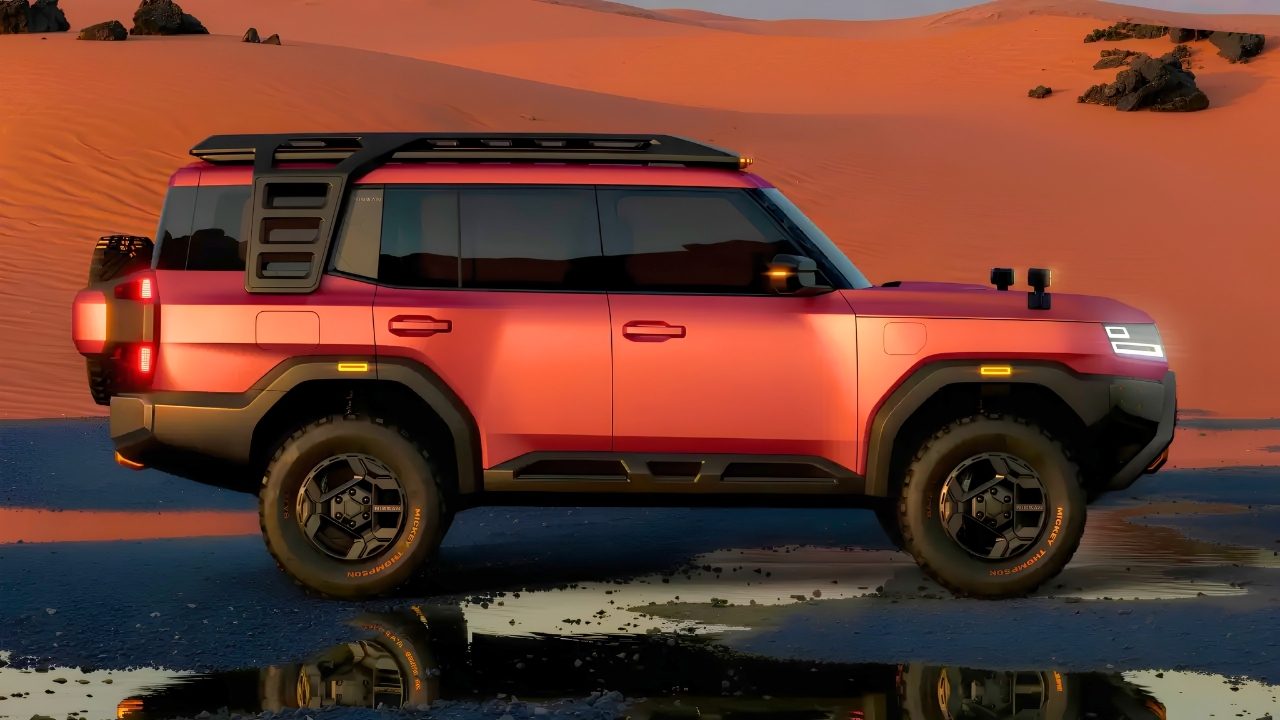
The production model of the Nissan Terrano is all set to be the same as the concept, which features segmented LED headlights to give a futuristic and cyberpunk look, the Nissan wordmark at the upper grille instead of the logo, hood-mounted focus lamps for better visibility during off-roading, a rugged bumper and rigid skid plate, and functional air intakes for cooling at the front end.
On the sides, it features a flat roofline and vertical pillars to give it a Defender vibe, retro three-spoke wheels to improve road presence, and traditional door handles for practicality; at the back, it gets a tailgate-mounted spare to reflect its off-roading identity, a horizontal light bar for modern styling, and a side-hinged door for easy boot access.
Space & Dimensions
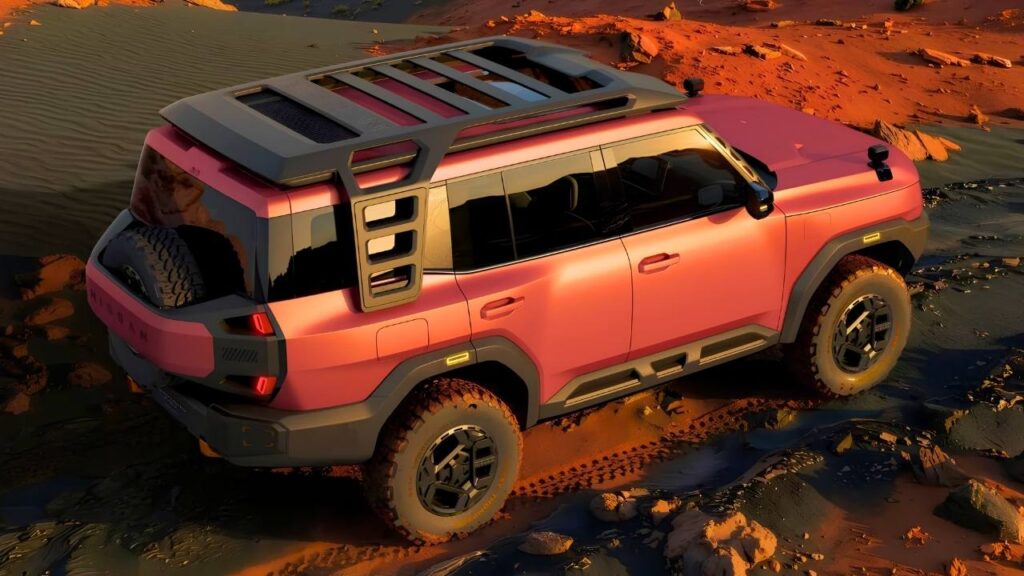
The concept of the Nissan Terrano was showcased with the seating capacity of five people in a layout of two and three. The car will feature a large boot space that will make it capable of carrying multiple big pieces of luggage. The rear seats are set to be foldable; doing so will increase the cargo space significantly.
Dimensionally, it is going to be longer and wider than its main rival, the Toyota Fortuner. Reportedly, it will come with a length of around 5.4 metres, a wheelbase of around 3.3 metres and a clearance of around 220 mm to ensure it can easily navigate on rough terrain. The actual measurements are set to be revealed sooner.
Interior & Features
The interior of the Nissan Terrano is yet to be revealed. As it is all set to be based on the production-ready Frontier PRO PHEV, it is likely to feature a 14.6-inch floating touchscreen as an infotainment system at the centre of the dashboard that acts as the control panel of the cabin, as the functions and settings are going to be touch-based, and a 10.25-inch fully digital instrument cluster under the steering wheel that shows all the driving data.
Its screen is set to be powered by the AI-integrated OS, which will support voice command, AI-based navigation, wireless connectivity and other features. All the seats, except the driver’s, are expected to be zero-gravity seats, which helps in reducing fatigue during the long journey. Other feature highlights are an electronically controlled panoramic sunroof, multi-zone climate control, a wireless phone charging pad, and Level 2 ADAS.
Powertrain & Performance
Nissan is yet to reveal the powertrain and performance. As it is set to share the underpinnings of the Frontier PRO PHEV, it will get a 1.5-litre turbocharged petrol engine with a 4-speed dedicated hybrid transmission. The car will be equipped with two motors, one on the front axle and another on the rear, meaning its drivetrain is all-wheel drive.
Expectations are that its combined power output will be 402 hp and peak torque of 800 Nm, making the vehicle sprint from 0 to 100 km/h under 7 seconds. The top speed is most likely to be limited to 170 km/h. And it may feature a 33 kWh ternary lithium (NMC) battery, giving an all-electric range of 135 km, and the combined range may be above 1,100 km.
Its electrical architecture is expected to be a 400-volt supporting 3C DC charger that will take around 30 minutes for 10-80% charging. With a full battery charge, the fuel efficiency will be around 75 kmpl, with the full battery and around 15 kmpl if the battery is drained.