The Hyundai IONIQ 3, a five-door all-electric hatchback, was unveiled on April 20, 2026, at Milan Design Week; its production is all set to start in mid- to late 2026. Firstly, it will be introduced in the European market, most probably in late 2026, and then it will be introduced to the international market.
The dimensions in terms of length, width, height and wheelbase are 4,155 mm, 1,800 mm, 1,505 mm and 2,680 mm. The ground clearance is yet to be revealed but is likely to be 160 mm, which is good for tackling the speed breaker and rough terrain, and wheel size is available from 16 inch to 19 inch.
In the United Kingdom, its price is anticipated to be between £25,000 and £30,000; the actual one will be revealed with the launch. It is set to be positioned below its sibling, the Kona Electric, which is available with the price of £34,995, and the vehicle competes with the Volkswagen ID.3, Kia EV3 and MG4 EV.
Front, Side & Rear Profile
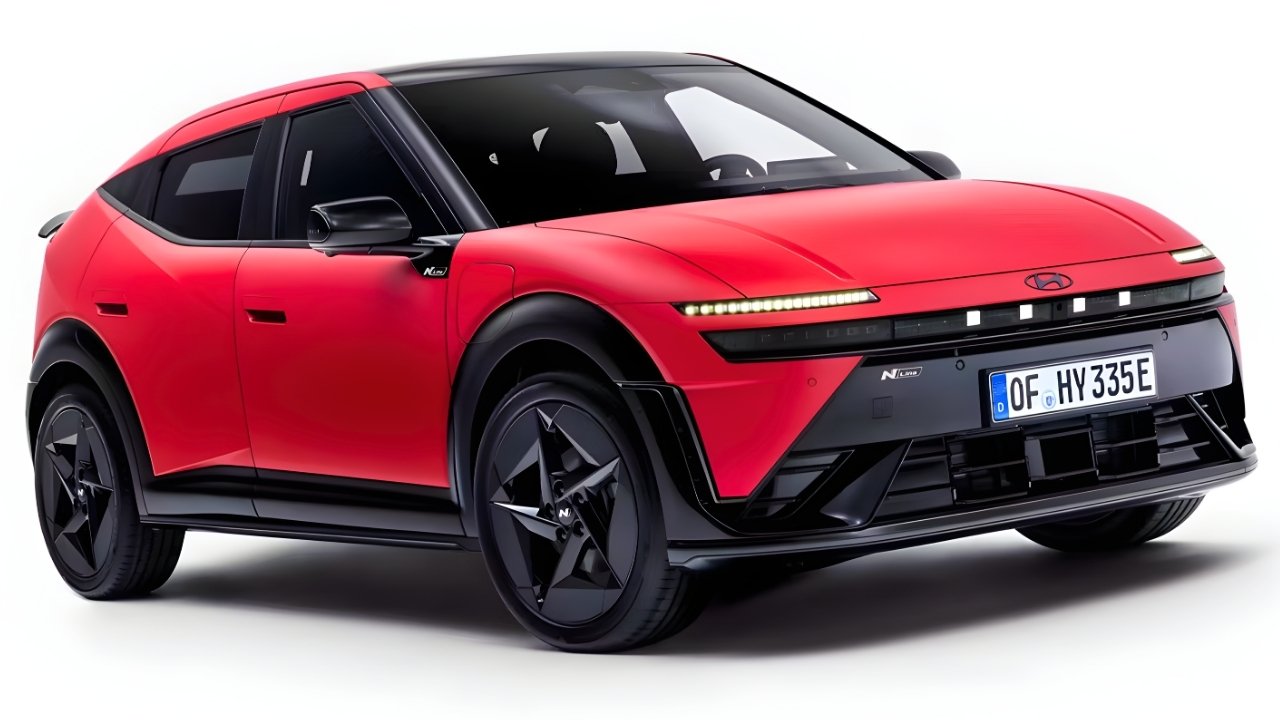
Upfront, it features Split headlight setup: the LED strips’ eyebrows are placed on the top, and the main headlight is placed lower under the black panel. On the front fascia, there are four LED squares below the Hyundai badge, which reflects its identity ‘H’ in the Morse code.
On the sides, the car gets an ‘Aero Hatch’ silhouette, which combines hatchback practicality and sedan-like aerodynamics. The rear section is quite sloping, which adds sportiness, and entry doors get flush-door handles that improve efficiency. It runs on large alloy wheels, which reduces air drag.
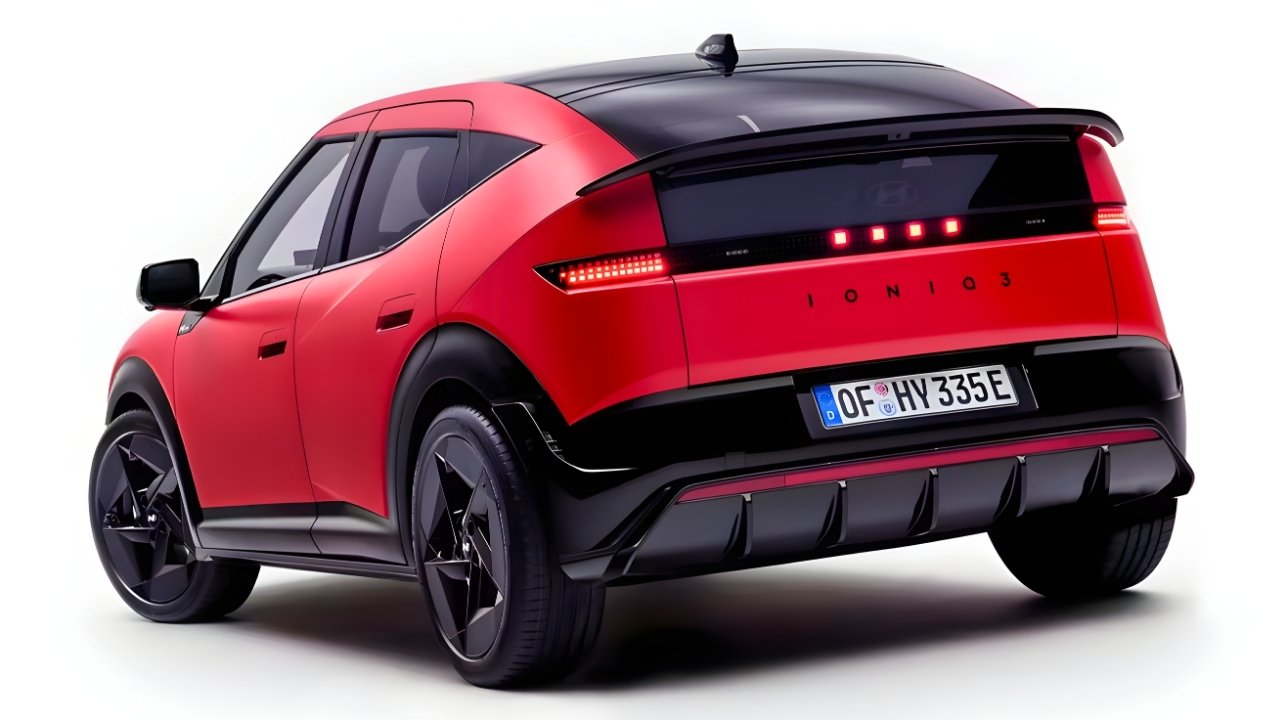
At the rear, it gets integrated roof spoilers to make its back look clean. To ensure better airflow, it gets a smooth and minimal rear surface. The tail light is also available in pixel style, which gives a strong identity, and its wide and stable stance makes its rear look planted and balanced.
Cabin, Infotainment & Space
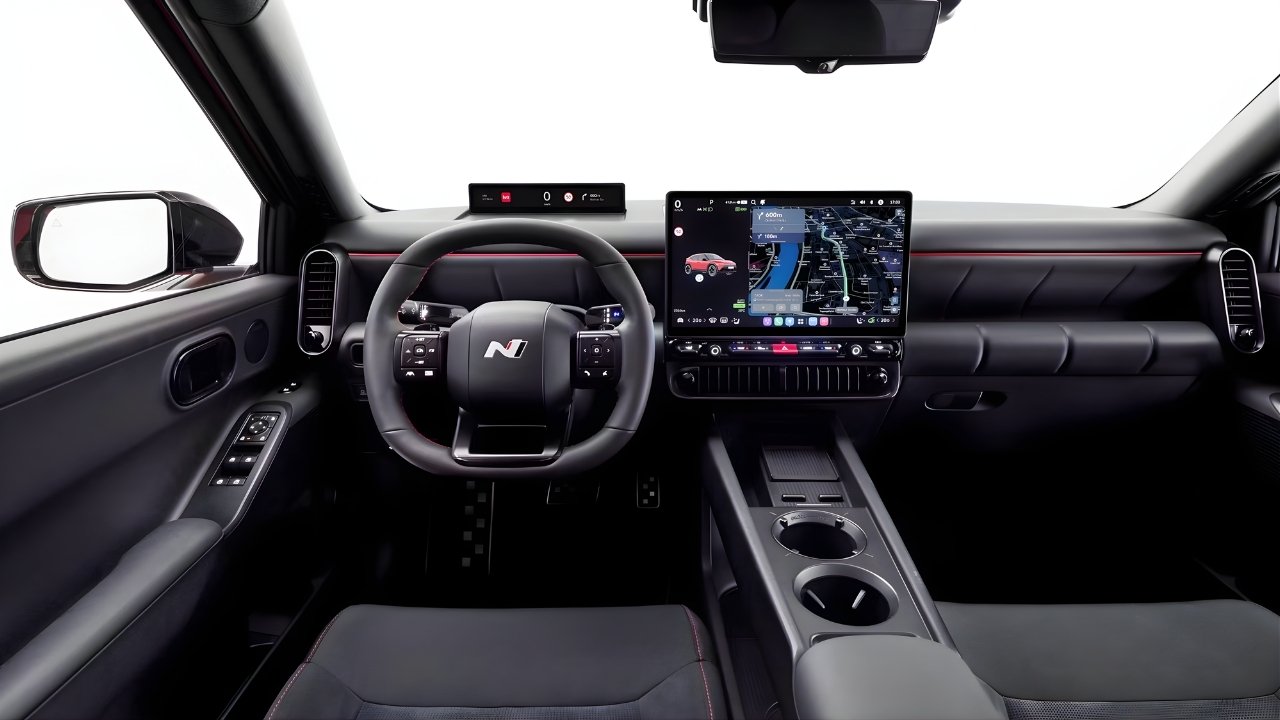
The car’s interior design is like a living room with the main focus on comfort and usability, which is equipped with a 12.9-inch touchscreen for infotainment that is based on Android Automotive OS, but the 14.6-inch one is available optionally. There’s also a digital instrument cluster for drivers, which shows all the driving data, including navigation.
For the wireless connectivity, it gets Android Auto & Apple CarPlay, Bluetooth and Wi-Fi. It features a spacious cabin with a seating capacity of 5 people in a layout of 2 and 3, and there’s a boot space of 441 litres and it can carry five big pieces of luggage easily.
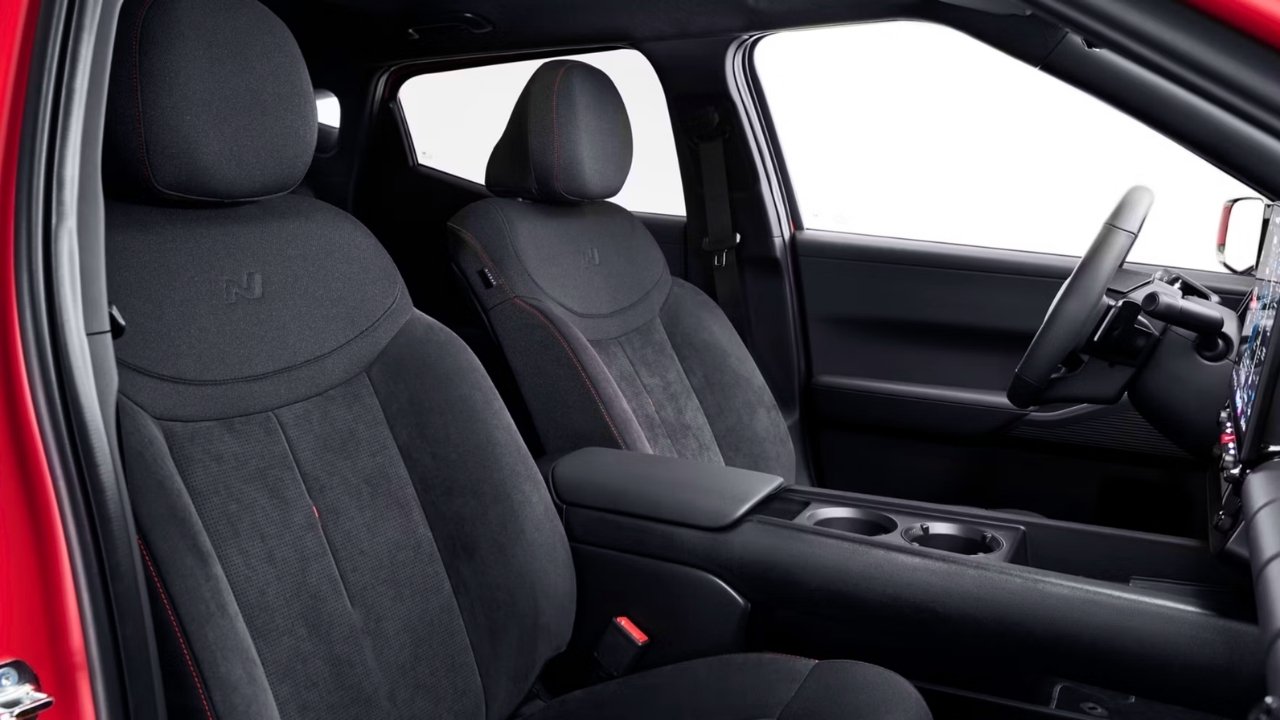
It features ventilated and heated seats to ensure occupants’ comfort during cold and hot weather; the ambient lighting is present across the cabin that enhances mood during the night, and the multiple-speaker BOSE sound system gives the theatre-like and immersive audio experience inside the cabin.
Battery, Performance & Charging
The vehicle is based on E-GMP (Electric Global Modular Platform), whose electrical architecture is 400-volt. It comes with a single PMS motor on the front axle, featuring its drivetrain as front-wheel drive. Like other EVs in the segment, it features single-speed automatic transmission.
Available with two battery packs, which are 42.2 kWh and 61 kWh, referred to as standard range (SR) and long range (LR), whose WLTP range on a full charge is 344 km and 496 km, respectively. The real-world range is anticipated to be around 280-300 km for the SR trim and 400-420 km for the LT variant.
The power output for SR and LR trim is 107.8 kW (147 PS) and 99.5 kW (135 PS), respectively, but peak torque for both is 250 Nm. The SR variant accelerates from 0 to 100 km/h in 9 seconds, whereas the LR takes 9.6 seconds, and the top speed for both variants is 170 km/h.
With a DC charger, it takes 29 minutes and 30 minutes for 10 to 80 per cent charging for the SR and LR trims, respectively. The DC charging capacity is yet to be revealed but is likely to be available at 120 kW, as the vehicle is based on 400-V electrical architecture.