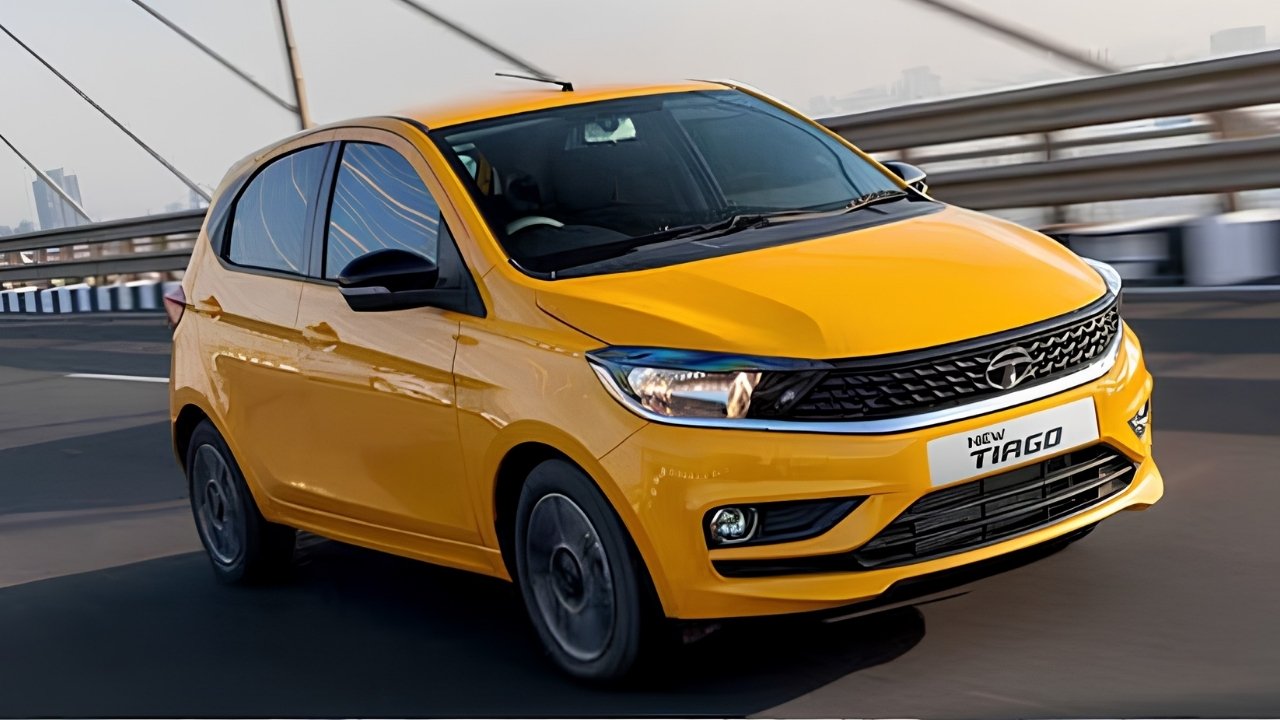
Tata Motors is all set to launch the 2026 Tata Tiago Facelift on May 28, 2026. The Indian carmaker will reveal its price at the launch, as reported by MoneyControl. It is expected to be available for sale in multiple variants with the ex-showroom price starting from ₹5.5 lakh. The outgoing model is available from ₹4.60 lakh to ₹9.05 lakh, meaning the upcoming one is set to be a little costlier than the existing one.
The 2026 facelift is expected to be introduced in the Indian market with cosmetic changes and interior upgrades. It has already been spotted testing multiple times on public roads, which have revealed many details about its exterior changes. Upfront, it is set to get a new slim grille, a redesigned bumper, sharper headlamps, tweaked fog lamps, and updated LED daylight running lights.
In profile, it is set to retain mechanical door handles for better practicality and powered outside rear-view mirrors. It will get new multi-spoke alloy wheels that enhance its road presence. The rear will get updated tail-lamps, a redesigned tailgate, and a sportier bumper with black cladding; together, these changes at the back enhance its rear view. Reportedly, it will come with new colour options.
No changes in its dimensions are reported; it is all set to come with the same size as the outgoing model. Its length, width and height are 3765 mm, 1677 mm and 1535 mm, respectively. Its wheelbase is 2400 mm, ground clearance is 170 mm, and turning radius is 4.9 metres. It comes with two wheel options that are 14-inch and 15-inch, with tyre sizes of 175/60 and 175/65.
Features a seating capacity of 5 people in a layout of 2-3; behind the second-row seats, there’s a boot space of 242 litres that helps in carrying multiple small pieces of luggage. Compared to its competitors, the Maruti Suzuki Swift, Hyundai Grand i10 Nios, and Maruti Suzuki WagonR, it has a small cargo capacity, but folding the rears increases the boot space significantly, giving ample space to carry big luggage.
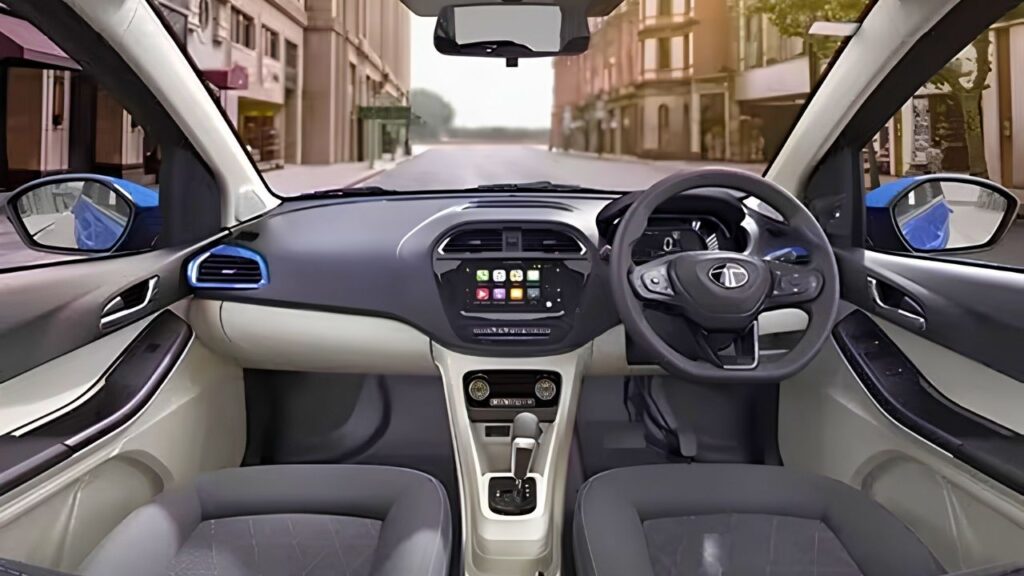
Reportedly, the interior is set to get a large infotainment system at the centre of the dashboard. It may get a 10.25-inch touch screen replacing the old one, which will have a better user interface and graphics. It is certain that it will support wireless Android Auto and Apple CarPlay. Under the steering wheel, it is likely to replace the analogue cluster and replace it with a semi-digital screen.
It is expected that the dashboard will now have fewer buttons compared to the outgoing model, as most of the settings are set to be touch-based through the centre-mounted screen. The top-trim is most likely to have a wireless phone charging pad and multiple-colour ambient light. Now, a total of six airbags are expected to ensure safety for all, not just front-seat passengers and drivers.
No changes in powertrain are reported by any source, meaning it will come with the same engine option as the outgoing model. It is set to come with a 1.2-litre naturally aspirated petrol engine, whose power output is 86 PS and peak torque is 113 Nm. It will be available with two transmission options: a 5-speed manual and a 5-speed AMT.
It is certain that it will form a front-wheel drive drivetrain. To accelerate from 0 to 100 kmph, it will take less than 12 seconds, and is highly expected to reach a maximum speed of 160 kmph. Its real-world fuel efficiency will be around 17-18 kmpl for city driving and 20-21 kmpl for highway cruising.
The iCNG variant is also expected to be continued; it will be introduced with the same 1.2-litre NA petrol engine, which generates the power of 75.5 PS and 96.5 Nm. It will come with the same above-mentioned gearbox options. Its fuel efficiency is expected to be 26-28 km/kg, it will sprint from 0-100 kmph under 15 seconds, and its top speed is likely to be 140 kmph.