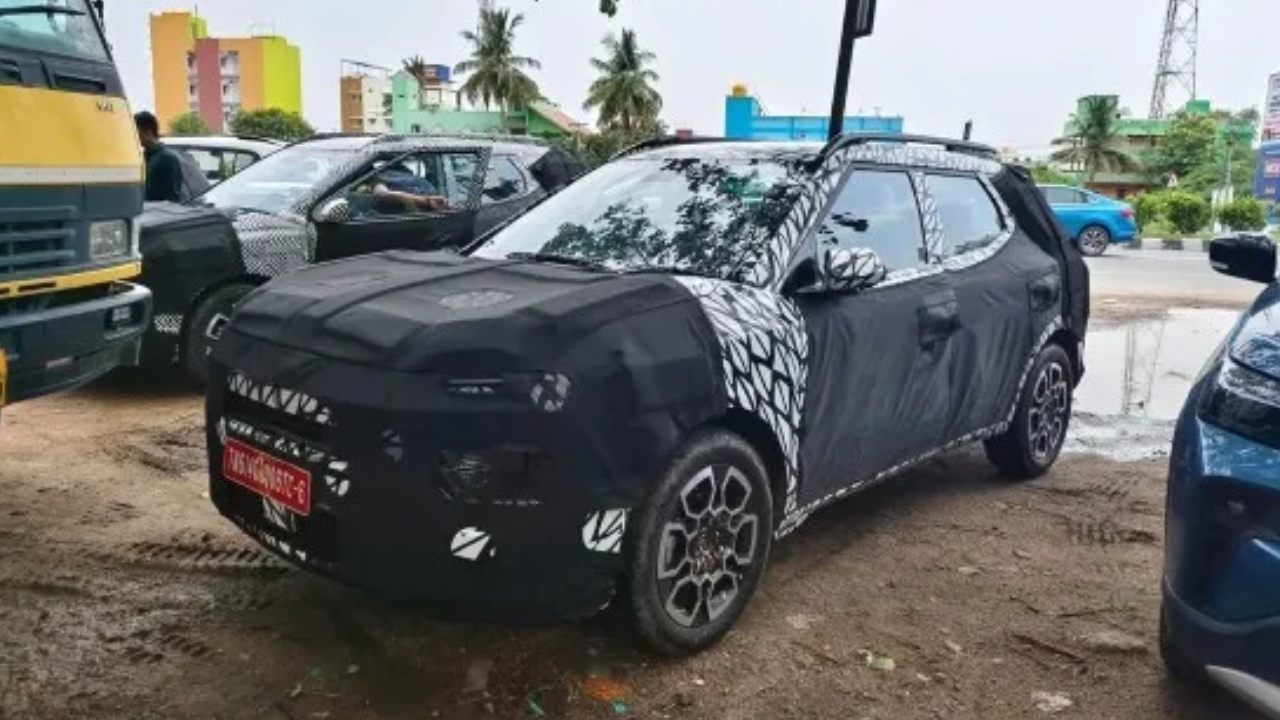
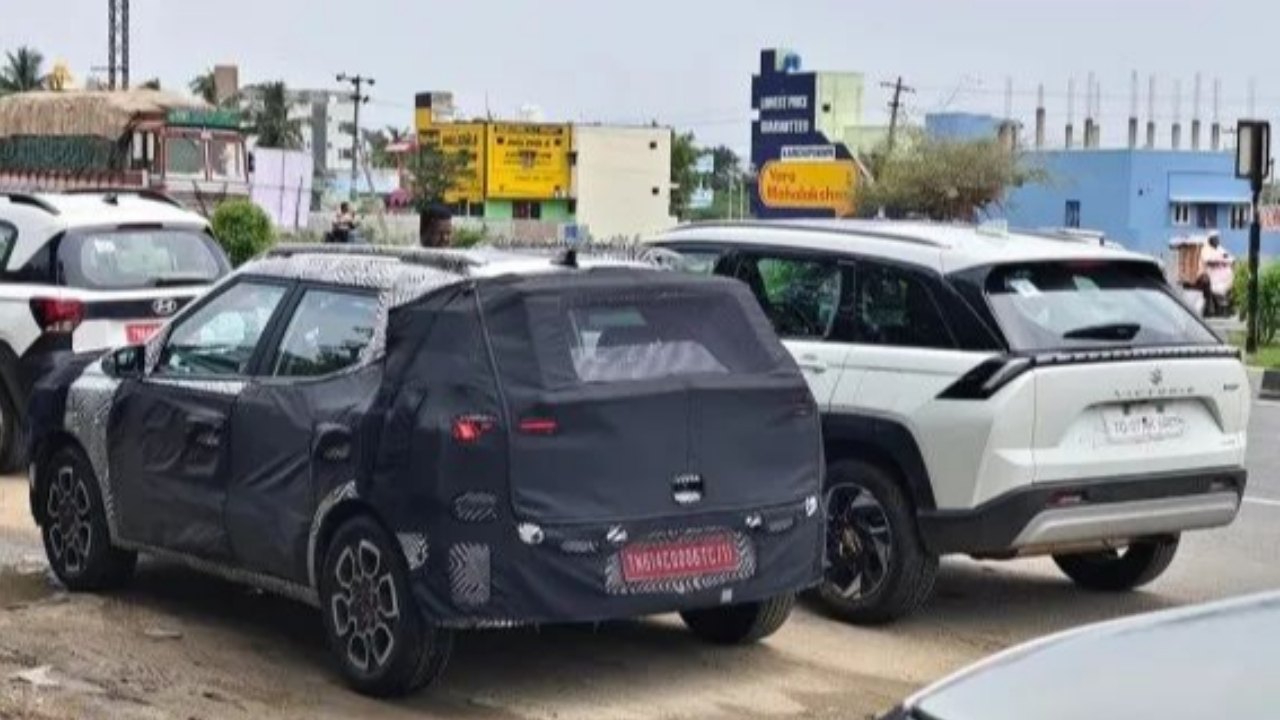
The South Korean automobile manufacturer Hyundai’s Indian subsidiary Hyundai India has been testing the Hyundai Bayon for the last few months. Fresh spy shots of its test mule show it is standing beside the Maruti Suzuki Vitara, giving an idea of its proportions. In the image shared online, the Bayon seems smaller than the Victoria, as the Maruti Suzuki car is 4.3 metres long; we are expecting that the Hyundai vehicle is around 4.1 metres.
Reportedly, the upcoming Bayon will make its position between the Venue and the Creta. The Venue is available with the ex-showroom price of ₹10.91 lakh to ₹19.95 lakh, and the Creta with ₹7.90 lakh to ₹15.83 lakh; the Bayon may be available starting with ₹9.5 lakh. Following the launch, it is all set to give tough competition to SUVs around 4.2 metres that are the Volkswagen Taigun, the Skoda Kushaq, the Kia Seltos, and the Maruti Suzuki Fronx.
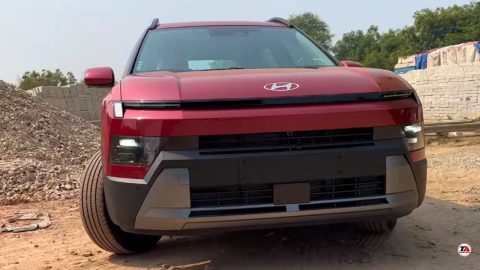
Notably, it is based on the Hyundai i20, the model which they recently launched in Brazil. After multiple sightings, many details about its exterior have emerged. Outside, it will get split headlights; the main LED headlamps are placed below, and LED daylight running lights are positioned above. It will have a large cascading grille with a wide air intake for fuel burning, a sculpted bonnet, and a bumper with a silver skid plate and SUV characteristics.
Other things that we may get to see following the unveiling are black wheel-arch cladding, large diamond-cut alloy wheels, roof rails, mechanical door handles, blacked-out window trim and outside rear-view mirrors with integrated indicators, a long wheelbase, high ground clearance, arrow-shaped LED taillamps, an integrated roof spoiler, a shark-fin antenna, and black bumper cladding with the silver skid plate.
It will come with a seating capacity of 5 people with a 2-3 layout and is expected to have a large boot to carry big luggage. The centre of the dashboard will feature a large touchscreen infotainment system supporting wireless connectivity via Android Auto, Apple CarPlay, and Bluetooth. It will support over-the-air software updates, connected car technology, and AI-based voice assistants.
This car may also feature an adjustable driver’s seat so the driver may find a comfortable seating position, rear AC vents for the comfort of rear-seating passengers, a wireless phone charger for phone-charging convenience, ambient lighting across the dashboard to enhance occupants’ moods, six airbags for safety for occupants, and premium upholstery for better seating comfort for all occupants, including the driver and passenger.
The upcoming Bayon is based on Hyundai’s K2 platform,m featuring a front-wheel-drive drivetrain, which is also used for the production of the Hyundai i20, the Hyundai Venue, and the Hyundai Verna. Its front suspension is expected to be a MacPherson strut and its rear a torsion beam. The ventilated disc may manage front-wheel braking, and the drum is expected to do the work for the rear wheel.
Reportedly, the Hyundai Bayon will come to India with two different internal combustion engine options. The first one is a 1,197 cc 4-cylinder Hyundai Smartstream G1.2 MPi (Multi-Point Injection) DOHC 16-valve naturally aspirated petrol-powered 5-speed manual gearbox that generates the power of 79 PS and torque of 112.7 Nm.
The second one is the 998 cc Hyundai Smartstream G1.0 turbocharged gasoline direct injection (T-GDi) 3-cylinder DOHC 12-valve petrol engine with two transmission options: a 6-speed manual and a 7-speed DCT, which generates the power of 100 PS and peak torque of 172 Nm.
Hyundai India hasn’t confirmed any date for the launch, but as the testing of test mules is becoming frequent, we are expecting that they may introduce it to the Indian market around the festive season, by late October 2026.