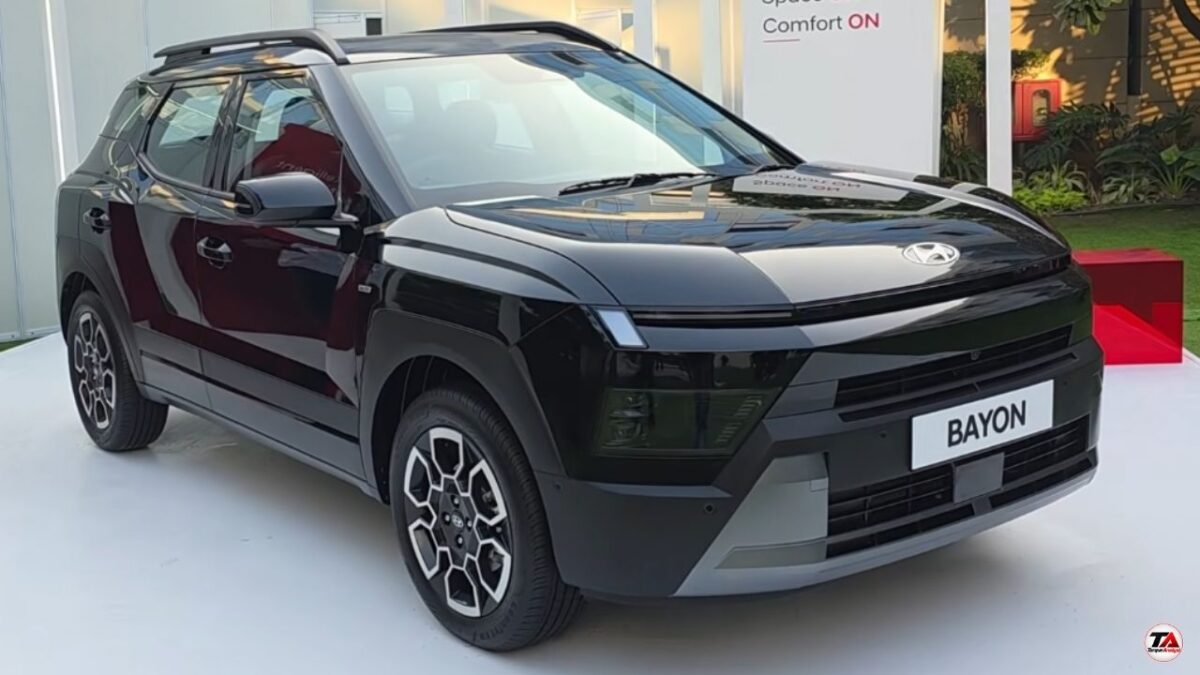
After a long wait, Hyundai has finally launched the Bayon with the petrol powertrain for the Indian market. The Japanese automobile manufacturer has officially introduced a total of seven variants: HX2, HX3, HX3+, HX5, HX6, HX8 and HX10. The introductory ex-showroom price has been made public; the base one costs ₹10 lakh.
As per report, this SUV will be manufactured in India and exported to more than 50 countries. The booking for this model is already taking place with the amount of ₹11,000 from September 23, 2026; any individual who is interested in making purchases may book. Hyundai hasn’t yet disclosed when they will start this mid-size SUV.
The market launch in India took place around a month after the booking started. Launching the petrol version, the brand also confirmed that the launch for petrol CNG will take place in January 2027. The variant-wise are now officially out, they are shared inside the table below.
| Variant | Gearbox | |
| MT | iVT | |
| HX2 | ₹10.00 lakh | – |
| HX3 | ₹10.90 lakh | – |
| HX3+ | ₹11.80 lakh | – |
| HX5 | ₹12.45 lakh | ₹13.85 lakh |
| HX6 | ₹13.57 lakh | ₹14.97 lakh |
| HX8 | ₹15.10 lakh | ₹16.54 lakh |
| HX10 | ₹16.65 lakh | ₹18.00 lakh |
More than 500 litre cargo capacity.
The Bayon has a length, width and height of 4,245 mm, 1,810 mm and 1,605 mm, respectively; these details have been revealed officially. Other details that have surfaced are the wheelbase of 2,600 mm and ground clearance of 205 mm. Notably, the height also includes roof rails, and ground clearance is in the unladen condition.
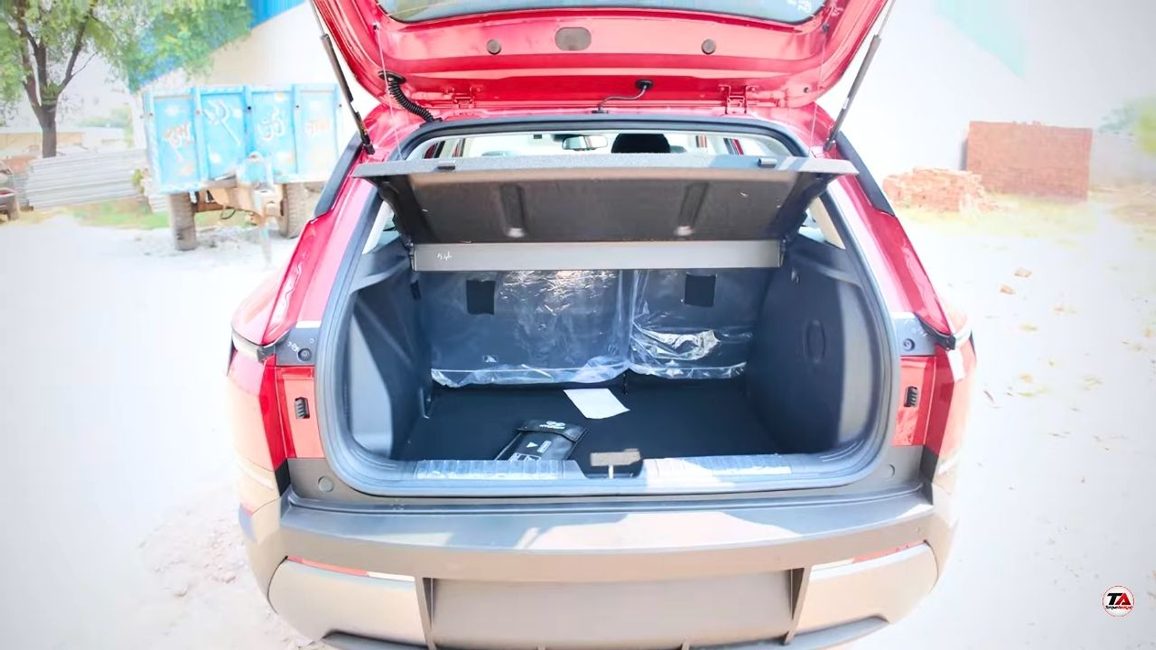
Its dimensions place it between the Creta and Venue in the SUV lineup of the brand in India. Five seats inside the cabin can be seen in a 2-3 layout, and as per the Hyundai, the boot space is 505 litres, which helps with carrying luggage conventionally. The seat supports a 60:40 split folding; it means the seats in the second row support individual folding.
A total of 10 colour options are available.
Hyundai launched the Bayon in a total of ten colour options, including six mono-tone, two double-tone and two matte options. The mono-tone colour options are the Atlas White, Fiery Red, Ecotronic Grey, Golden Bronze, Titanium Black, and Classy Blue. Among them, the last two look more premium than the other four. Those who don’t want any mono-tone option may opt for two-tone.
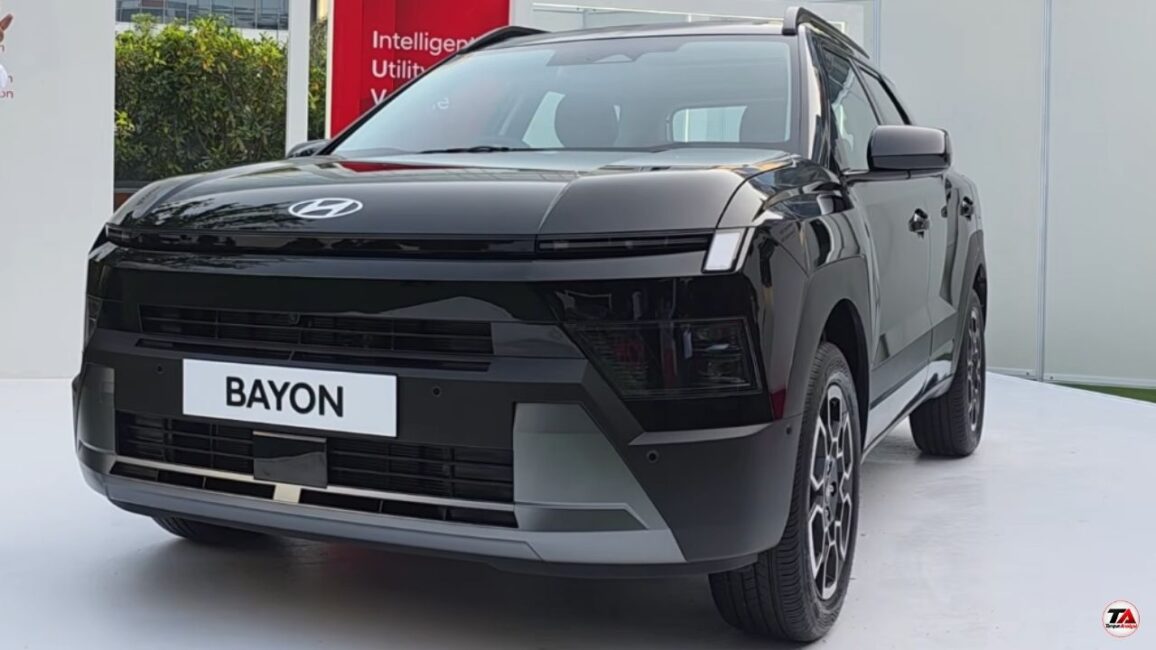
Two double-tone colour options are the Atlas White with Black Roof and Fiery Red with Black Roof. Between these two options, the one looking more sporty is the former one; the latter one is an ideal choice for the younger buyers. The matte options are the Classy Blue Matte and Titanium Black Matte; they are for those who want a more premium, understated and distinctive look than the glossy one.
Around 19 kmpl claimed range.
Powering the wheels is a 1,497 cc four-cylinder MPi petrol-powered internal combustion engine, for which two different transmission options are available. These two gearbox options are the 6-speed MT and iVT. Notably, the first three variants, HX2, HX3 and HX3+, are available with only a six-speed manual, but the last four, HX5, HX6, HX8 and HX10, are also with the Intelligent Variable Transmission.
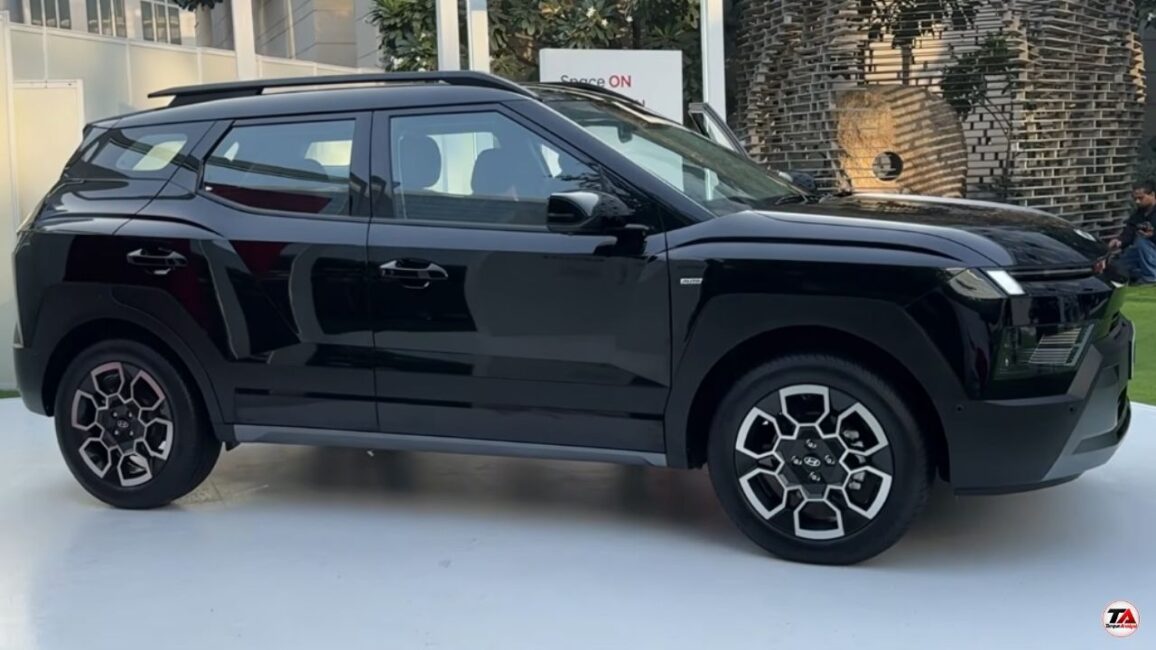
Hyundai says that the ICE for the Bayon crank is 113 bhp at 6,300 rpm and 143.8 Nm at 4,500 rpm. Another detail that has also been revealed is the front-wheel-drive drivetrain. No variant is offered with a rear-wheel-drive and/or all-wheel-drive option. The acceleration timing for 0 to 100 kmph and top speed is still pending, but the ARAI-certified fuel efficiency is only 18.6 kmpl for iVT. The real-world mileage details are yet to emerge.
Two large screens on the dashboard.
Officially revealed details for the Bayon reveal that Hyundai is offering two 12.3-inch displays on the dashboard, which are connected together. One of the two is placed at the centre of the dashboard, and another one can be seen behind the steering wheel. The interior image shows a D-shaped three-spoke steering wheel with physical buttons and foldable cup holders in the second row.
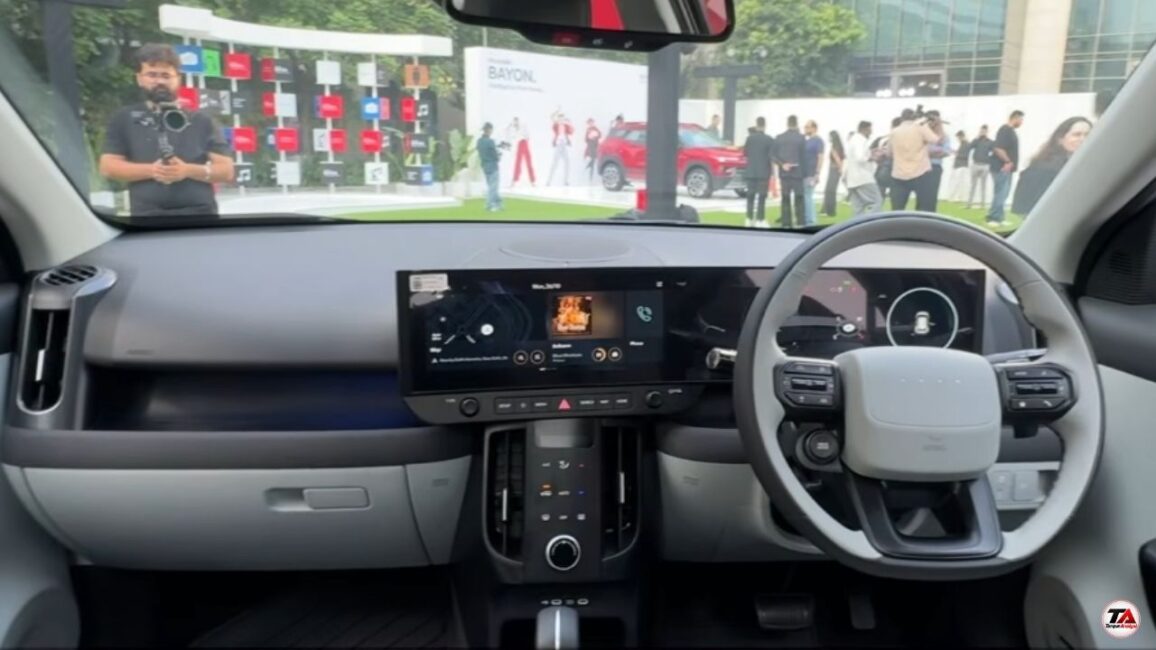
Other features that Hyundai has officially revealed are the leatherette upholstery, ambient lighting, eight-way powered driver’s seat, ventilated front seats, panoramic sunroof, and much more. Notably, the features vary depending on trims. The base trim gets only a few features that are essential; the mid-range version adds more, but the top-end variant is the one which is fully fledged.