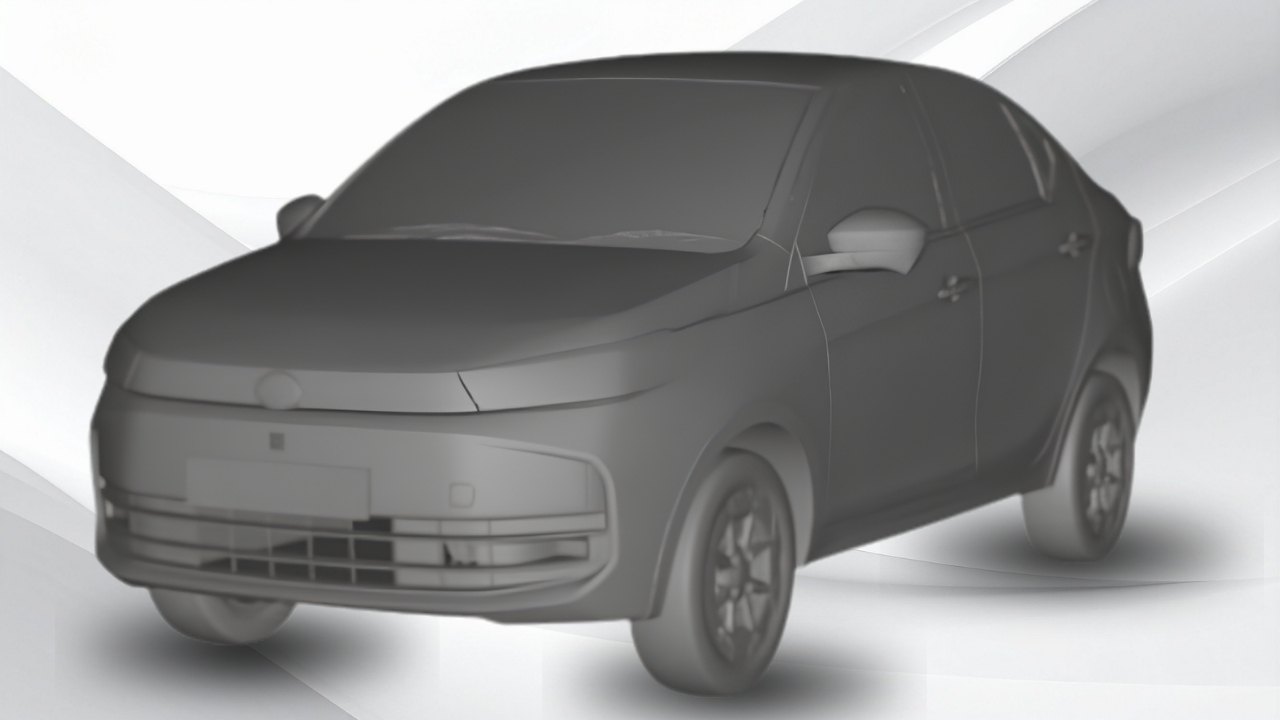
The Tigor from Tata Motors is available for sale in the Indian market from March 29, 2017, with an ex-showroom price of ₹5.55 lakh to ₹8.84 lakh, and very soon, they will introduce the facelift of the same. Recently, the carmaker has patented the Tata Tigor facelift, and the images of the same are floating online.
The patent image shows the Tata Tigor facelift is set to be similar to the Tata Tiago facelift, introduced to the Indian market on May 27, 2026. Analysing the patent images, we find that the facelift will have slimmer headlights, giving a modern look, and a gloss-black connecting trim between the headlights with a Tata emblem for styling.
Other details that we get to know from the patent images are a redesigned bumper to give it a different look, larger air intakes for better fuel burning that results in higher engine efficiency and bumper-integrated pixel-style LED fog lamps. Fog lamps on cars provide better illumination on the road during rough weather.
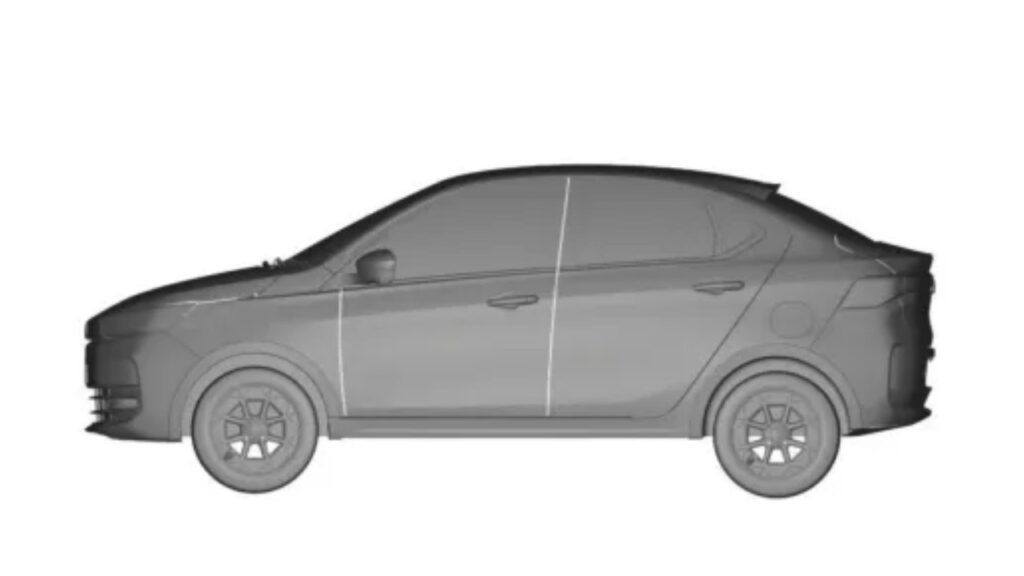
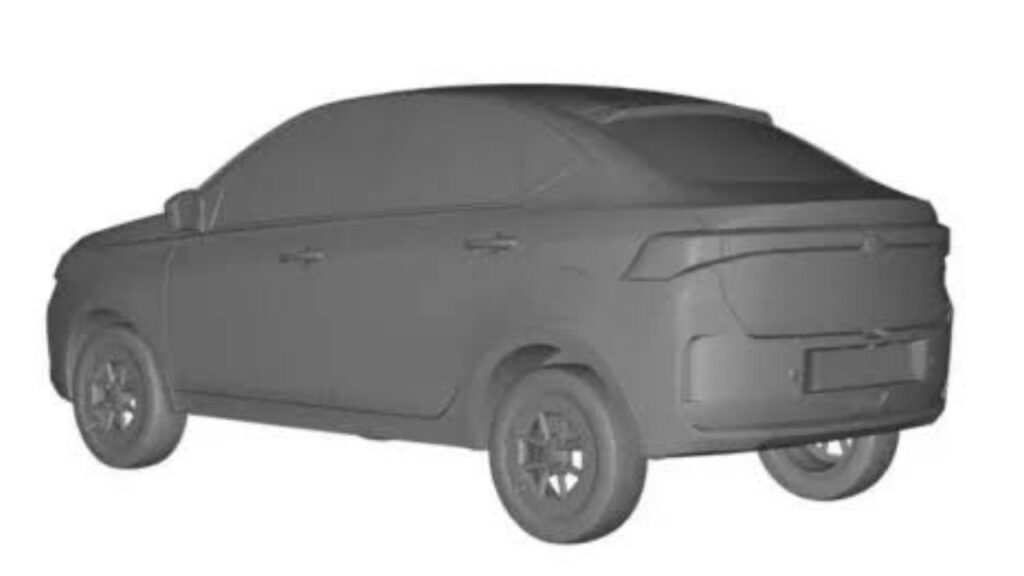
On the sides, this car will get black wheel arch cladding to add ruggedness and SUV characteristics and fresh eight-spoke alloy wheels with the same 15-inch size; its rear seems to get full-width LED taillights with the Tata logo at the centre, creating a wide stance and an updated, clean bumper with a horizontal-shaped reflector on the side and reversing lights at the centre that help in parking.
Notably, the Tata Tigor is not the only model that will get a facelift; even its pure-electric counterpart will. As of now, there’s no patent image of the Tata Tigor EV facelift, but there’s high speculation it will look similar from the front and rear to its internal combustion engine counterpart, but the EV will get a closed-off front and may not feature any fog lights.
The interiors of the facelift are still unveiled. Reportedly, we are going to see a complete all-new dashboard with soft trims, and even the upholstery of seats is set to be upgraded to provide much better comfort. May get a refreshed floating touchscreen infotainment system at the centre of the dashboard and a semi-digital instrument cluster.
Other features that they may get are 6 airbags to ensure safety for all, automatic climate control to maintain the set temperature, 360-degree camera for surround view, rear AC vents to keep occupants cool in hot weather and warm in extreme cold, and fast-charging USB ports for charging the mobile phone fast and conventionally.
Notably, the powertrain and performance for both the Tigor and Tigor EV are set to remain the same. The Tigor will get a 1,199 cc 1.2 L Revotron 3-cylinder naturally aspirated petrol-powered internal combustion engine with two transmission options: a 5-speed manual and a 5-speed automated manual.
It generates the power of 86 hp and 113 Nm. The CNG variant may also be introduced; it will generate the power of 75.5 hp and a torque of 96.5 Nm. The drivetrain for both pure petrol and CNG is front-wheel drive.
On the other hand, the EV will get a permanent magnet synchronous motor with a single-speed automatic transmission on the front axle featuring a FWD drivetrain.
It will retain both LPF battery packs, which are 19.2 kWh and 24 kWh, giving the ARAI-certified range of 226 km and 285 km, respectively. With the standard, the PMSM will generate the power of 61 hp and a peak torque of 110 Nm, but with the large one, it will deliver 75 hp and 114 Nm.
The launch dates for the Tigor and Tigor EV are still pending; reports suggest the carmaker will introduce them to the market after the Sierra EV launch and before the Safari EV debut. So, we are expecting that they may introduce them in late August 2026 or early September 2026.