In the 2026 Busan Mobility Show, the South Korean automobile manufacturer Hyundai Motors has revealed the eighth generation of the Hyundai Elantra, which they sell in the domestic market with the name Hyundai Avante. Reports say that the carmaker will start its presale in South Korea in the third quarter of 2026, and then it will make its debut in the global market in 2027.
Front, side, and rear styles
Upfront, it gets split LED headlights set up. The slim daylight running lights are just below the hood in a horizontal shape that connects with the black trim, and vertical DRLs on the edge create an H shape. Its main headlights are integrated with the bumper. The bonnet gets the Hyundai logo, and the bumper gets a silver skid plate for aesthetics.
The sides are equipped with flush-type door handles to reduce drag and add premiumness; blackout window trims to enhance the side view; sculpted wheel arches for styling; 18-inch five-spoke alloy wheels for bold road presence; and body-colored, front-door-integrated outside rear-view mirrors for a clear view of vehicles running behind.
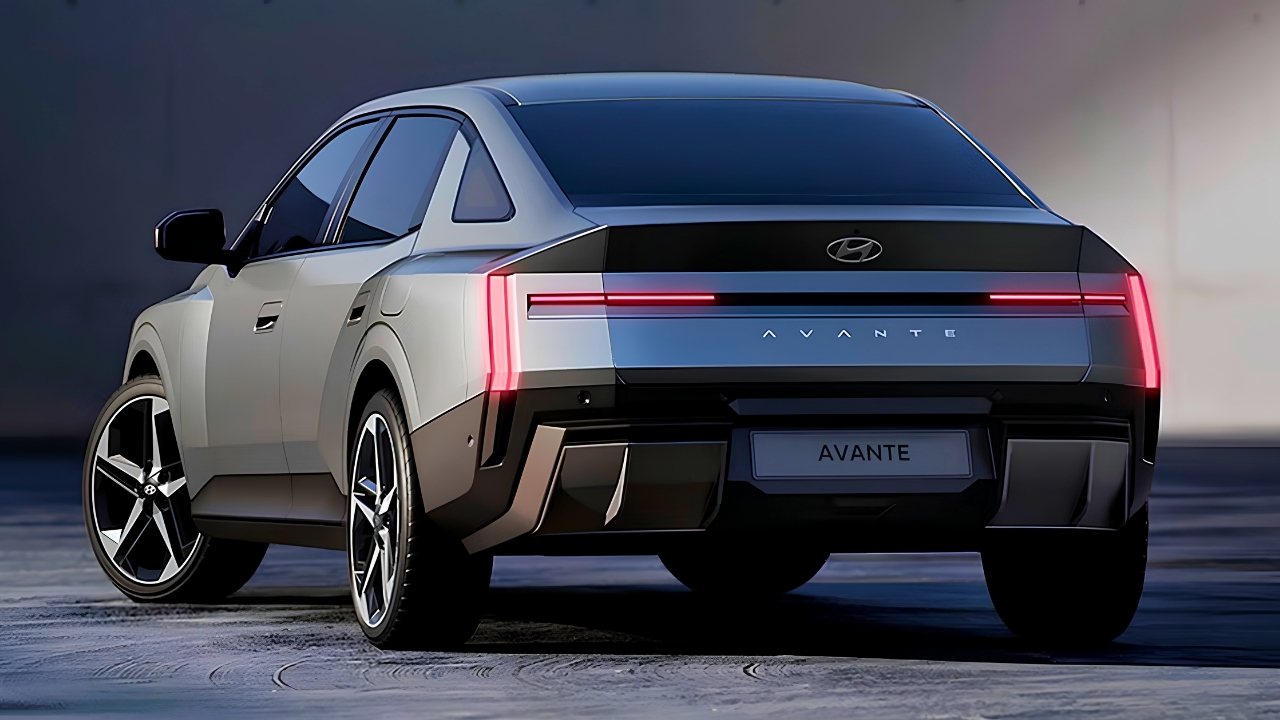
At the back, it has a horizontal LED taillight on the tailgate and edge that is connected via black trim like front-end DRLs, and outer edges get two parallel vertical LED taillights, which creates an H shape, mirroring the front-end lighting signature. A ducktail spoiler is present on the boot lid, and a silver skid plate on the diffuser-style sporty bumper.
Color options and dimensions
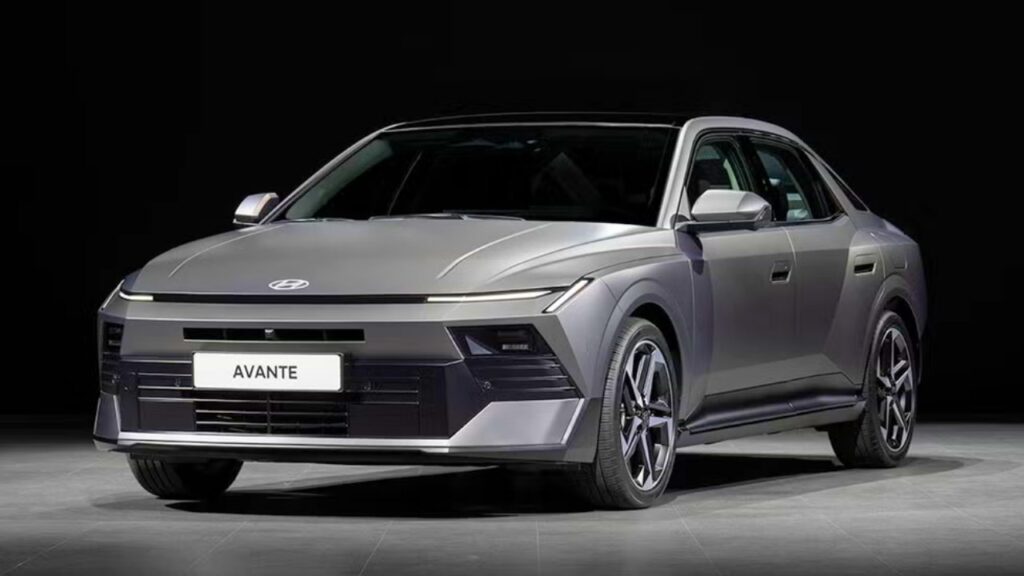
The South Korean automobile manufacturer will introduce it to domestic and international markets in six exterior color options; however, they have revealed only three options: Kodiak Blue Matte, Raptor Grey Matte, and Graphene Green Pearl. It is very unlikely that there will be any double-tone option for any market.
The length, width, height, and wheelbase are now 4,765 mm, 1,855 mm, 1,425 mm, and 2,750 mm, respectively. Notably, compared to the outgoing model, the successor is 55 mm longer with 30 mm more wheelbase, the distance between the axles is 30 mm wider, and there is no change in its height.
Seating and boot space
They will introduce the successor of the current Hyundai Elantra (Avante) with the same seating capacity of 5 people in a 2-3 layout, but now the occupants of the rear seats are going to get more legroom and shoulder room because the length and width have been significantly increased.
As the wheelbase is also increased, it is now certain that behind the second row there will be more boot space to carry luggage. The current model is available with a cargo capacity of 474 liters, so we are expecting that the upcoming model will have around 550 liters of boot space.
Interior and features
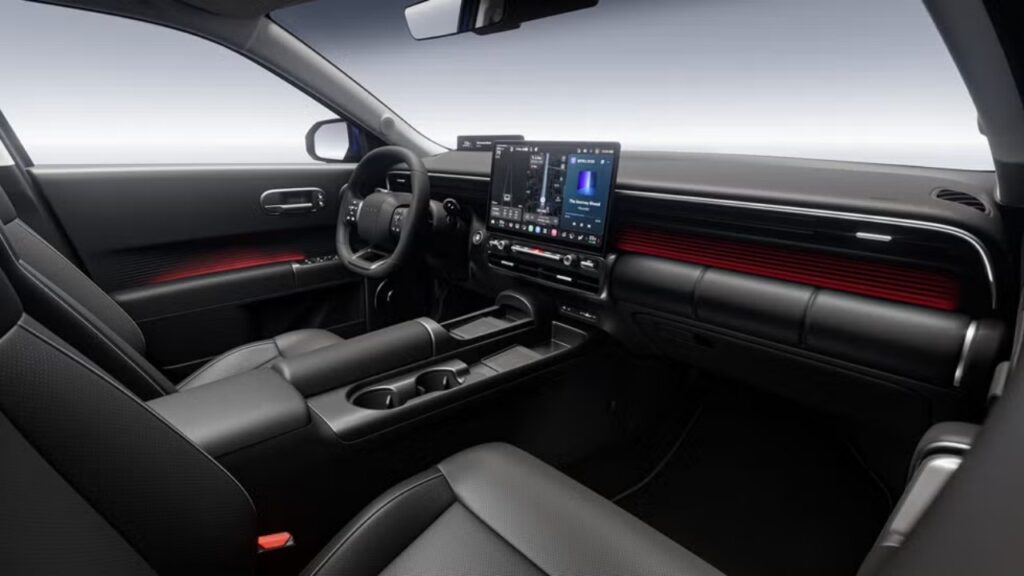
The eighth generation is also set to be sold with three interior themes: Cognac, Ivory Rose, and Chalk Beige. Notably, the manufacturer has also revealed its interior. Now, it has a totally different dashboard than its predecessor. Depending on the variant, the center of the dashboard is going to be equipped with a 12.9-inch or 14.6-inch touchscreen infotainment system.
The infotainment system will run the Android Automotive-based Pleos Connect operating system, featuring the Gleo AI generative AI voice assistant that will do the touch-based things over the natural voice commands. It will also feature Over-the-Air (OTA) software updates, built-in navigation, and wireless Apple CarPlay and Google Android Auto for video and audio streaming.
The infotainment system is set to be integrated with the Bang & Olufsen premium audio system to ensure a high-quality audio experience inside the cabin. Get a two-spoke steering wheel with a four-dot Hyundai steering wheel emblem, under which there will be a standard slim digital instrument cluster for all markets showing the driving data.
Instead of the center console, the gear selector is mounted on the steering column, and the center console gets two wireless phone charging pads and two cup holders for convenience and ease of both the driver and the co-passenger. Other notable features are 10 airbags, 100W USB-C fast charging ports, dual-zone automatic climate control, and ambient lighting.
Powertrain and performance
The carmaker will introduce it to the South Korean market with two powertrain options: a 2.0-liter, 4-cylinder naturally aspirated petrol with a CVT gearbox, and a 1.6-litre 4-cylinder self-charging hybrid petrol internal combustion engine. The former one generates the peak power of 147 hp, and the latter produces 155 hp. Both powertrain options will come with a front-wheel drive drivetrain.