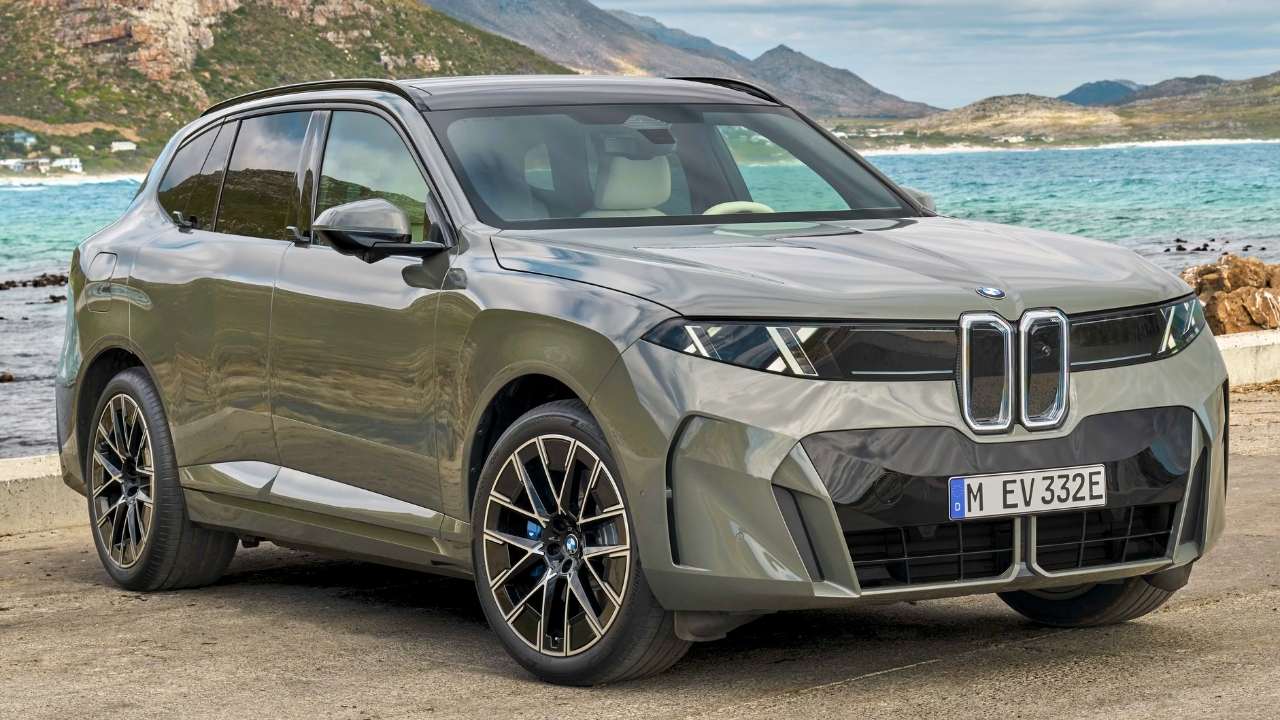
On June 30, 2026, Bayerische Motoren Werke revealed the fifth-generation BMW X5, a luxury sport utility vehicle, with many upgrades to its interior and a totally new interior. Reportedly, they will introduce five different powertrain options: a petrol-powered engine, a diesel-powered engine, a plug-in hybrid electric, a battery electric, and a hydrogen fuel cell electric.
Reportedly, its production is all set to start in August 2026 at BMW’s Spartanburg plant in the USA. They will launch it with the petrol-powered and diesel-powered internal combustion engine options in late November 2026; then the launch of the pure electric version will take place in the first quarter of 2027, and then the hydrogen will make its debut, which is still pending.
Outside, it features Neue Klasse-inspired design language with a double X-shaped LED daytime running light with integrated headlights, including high beam, low beam, and side indicators. Get a sculpted front bumper with large air intakes, a BMW emblem on the bonnet, an illuminated kidney grille, and a larger and upright stance.
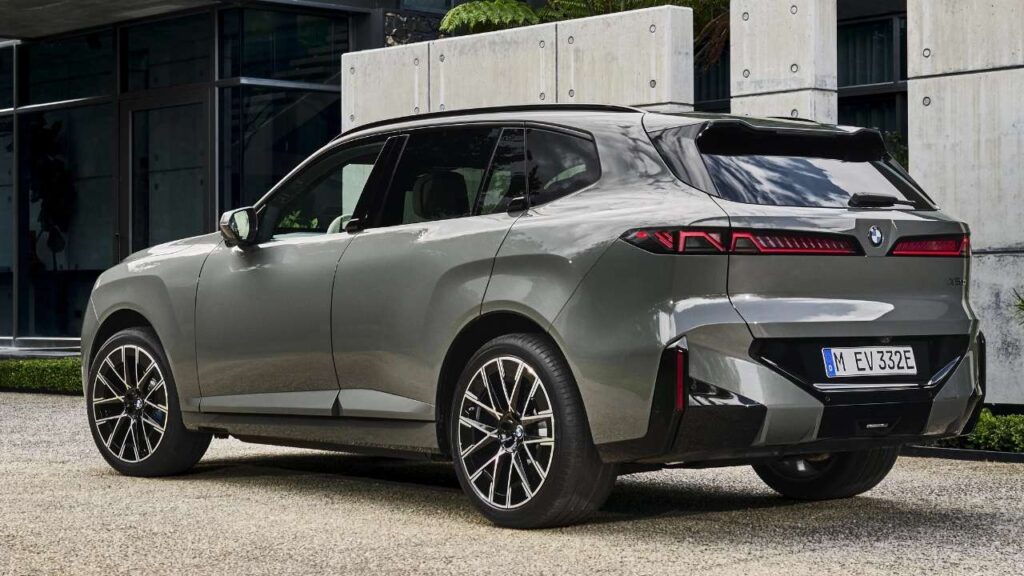
Other highlights from the exterior include flush-type door handles integrated with the B-pillar and C-pillar for the front and rear doors, up to 23-inch twelve-spoke alloy wheels, pronounced squared wheel arches, aero-optimized ORVMs, a roof spoiler, a sculpted rear bumper with diffuser styling, and a horizontal through-type LED taillight that connects with the BMW emblem.
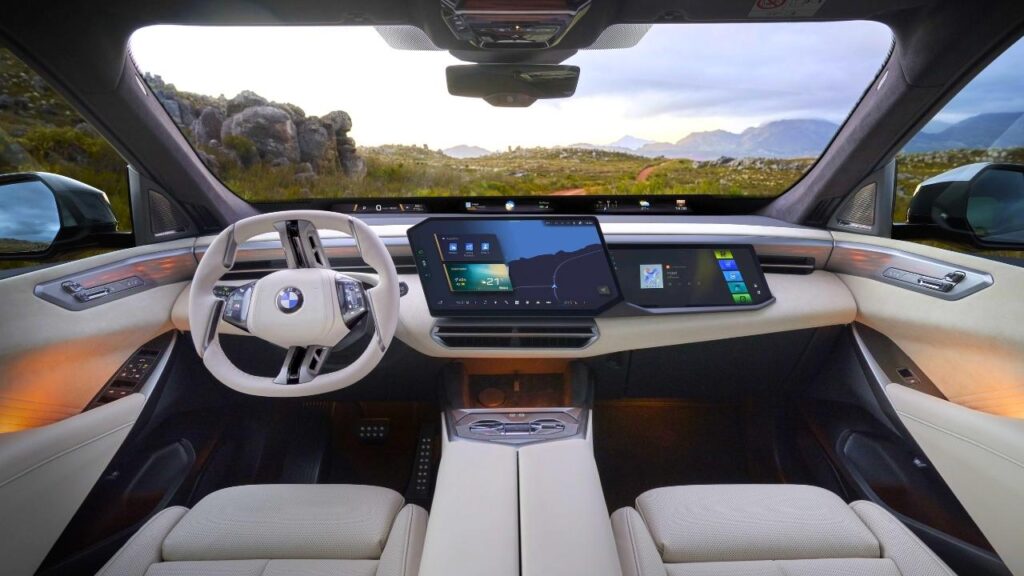
Inside, it gets a four-spoke steering wheel with physical buttons and a BMW logo; instead of a traditional digital instrument cluster, it gets a BMW Panoramic iDrive display across the base of the windscreen and a 3D Head-Up Display, which projects all the driving data on the windshield. The center of the dashboard is equipped with a 17.9-inch central touchscreen infotainment system.
The front passenger entertainment screen is set to be available as an option. Its entire cockpit is all set to run on the latest BMW Operating System X, which features a smooth user interface. Notably, the infotainment system supports wireless multi-device connectivity via Android Auto and Apple CarPlay, connected car technology, and OTA software updates to keep the infotainment system updated.
Other notable features are wireless phone charging, cup holders, a level 2 ADAS suite, and sporty seats that are now standard with the massage function, but the option of ventilated seats is optional. There is a dedicated rear touchscreen for climate control. Also coming are 5G connectivity, a panoramic glass roof, multiple USB-C charging ports, and digital key support.
It comes with seating for 5 people with a 2-3 layout, features boot space of 655 litres, which can be extended up to 1,850 litres; reportedly, the upcoming PHEV will have only a cargo capacity of 525 litres, expandable to 1,680 litres. It is 4,994 mm longer with a 3,035 mm wheelbase, 2,000 mm wider and 1,751 mm taller.
The ICE gets a 3.0-liter turbocharged inline-6 internal combustion engine, which is mated with an 8-speed automatic transmission featuring the xDrive all-wheel drive drivetrain and a 48V mild hybrid. The one petrol-powered generator has the power of 400 hp and peak torque of 580 Nm, and the diesel-powered one does 313 hp and 670 Nm.
The acceleration timing for 0 to 100 kmph is 5.2 seconds and 5.8 seconds for the petrol and diesel ICE options, respectively. The top speed for the first one is 250 kmph and the second reaches up to 233 kmph.
On the other hand, the PHEV gets a 3.0-litre turbocharged inline-6 petrol-powered internal combustion engine with an electric motor, and an 8-speed automatic gearbox featuring xDrive AWD drivetrain. They will introduce it with two different variants: 50e and M60e. The maximum speed for both variants is 250 kmph, and their WLTP emission-free range is 102 km.
The first one’s combined power output and peak torque are 489 hp and 700 Nm, respectively, featuring 0 to 100 km/h acceleration timing in 4.8 seconds, and the second delivers 612 hp and 800 Nm, which can accelerate from 0 to 100 km/h in only 3.8 seconds. Supports AC chargers up to 11 kW.
Alternatively, the EV gets two electric motors, one on each axle. It is equipped with a single-speed automatic transmission, whose drivetrain is also xDrive AWD. The combined power output and peak torque are 578 hp and 805 Nm, respectively; its 0 to 100 km/h acceleration timing is 4.6 seconds with a maximum speed of 210 km/h.
Equipped with a 141 kWh lithium-ion battery pack under the floor, which gives the WLTP range of 845 km. It is built on an 800-volt electrical architecture and supports DC chargers up to 460 kW, which take only 23 minutes for 10 to 80 percent charging.