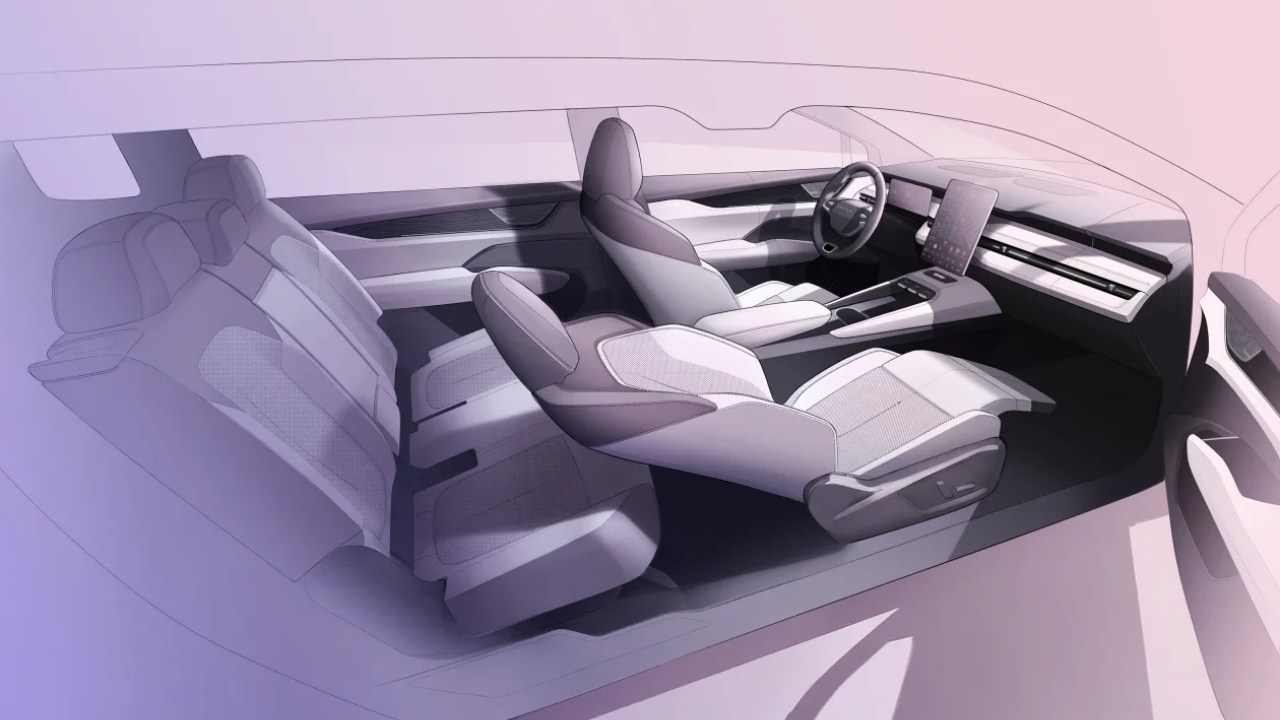
After teasing the Skoda Peaq exterior sketch on June 5, 2026, Skoda, the Czech automobile manufacturer, has released the interior sketch images on June 18, 2026, revealing what the cabin gets. The released sketch confirms that the carmaker is all set to introduce it globally with a seating capacity of 7 people in a 2-3-2 layout.
Meaning the front two get two separate seats for the driver and co-passenger, the second features three seats in a bench-like structure with ample legroom for comfortable seating, and the third row even has two bench-type seats, but the legroom seems a little tight and may not provide comfortable seating for adults.
The sketch doesn’t reveal the boot space area; however, they have already disclosed that cargo capacity with all seats standing is 299 litres, which can be extended up to 980 litres by folding rear seats when only five people are travelling. Reportedly, it will also come as a five-seater whose cargo space is 1,010 litres.
In the images shared, the straight window lines extending towards the third row are clearly visible, improving the openness of the cabin. Other notables are a large panoramic sunroof that runs towards the end of the second row, the co-passenger seat features extendable thigh support for better comfort, and both front seats get side bolsters for better cushioning.
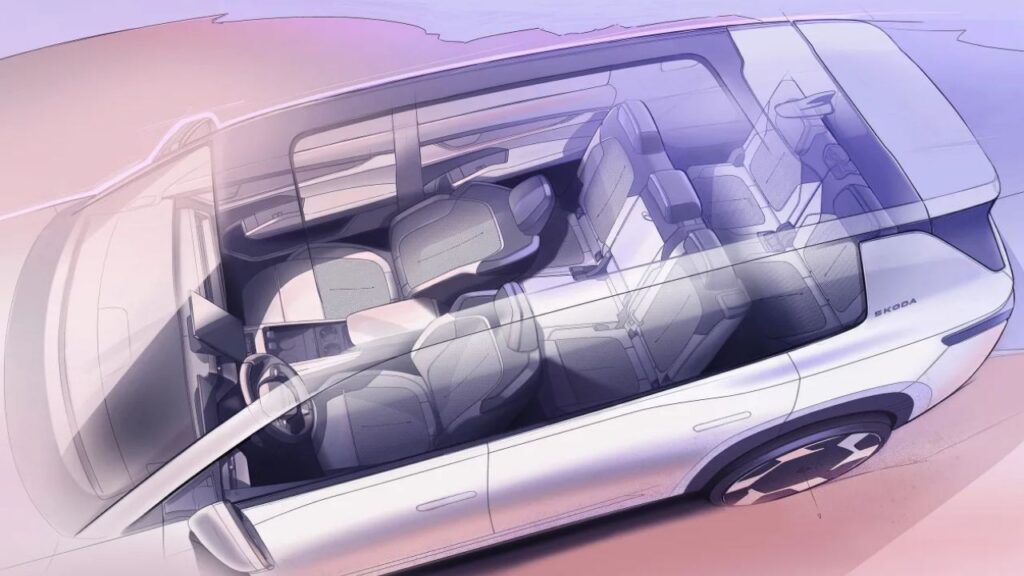
Features a clean dashboard with a 13.6-inch freestanding vertical touchscreen infotainment system at the centre, enhancing premiumness. The two-spoke steering wheel on the left side gets SKODA lettering for branding; under the same, a 10-inch slim rectangular digital instrument cluster is added.
The central console gets three toggles which are set to be climate control, volume setting and vehicle functions; an adjustable armrest; two wireless phone charging pads for convenience; and two cup holders for practicality. The dashboard has full-width AC vents to enhance the premium touch and add modern styling.
Moving outside. The front end is made using the new-generation Modern Solid design language with a closed-off grille enhancing aerodynamics for better efficiency; full-width DRLs below the hood, including horizontal LEDs at the corners and small multiple vertical LEDs at the centre, giving a modern touch; and two main unit LED headlamps placed below for better visibility at night.
On the sides, it features blacked wheel arch cladding for ruggedness; large double-tone alloy wheels adding bold road presence; frameless windows and flush-type door handles reducing aerodynamic drag and making the side view eye-catching; and double-toned electrically adjustable and foldable outside rear-view mirrors integrating blinkers, which help see the blind spots and also alert to the next move for the vehicles running ahead.
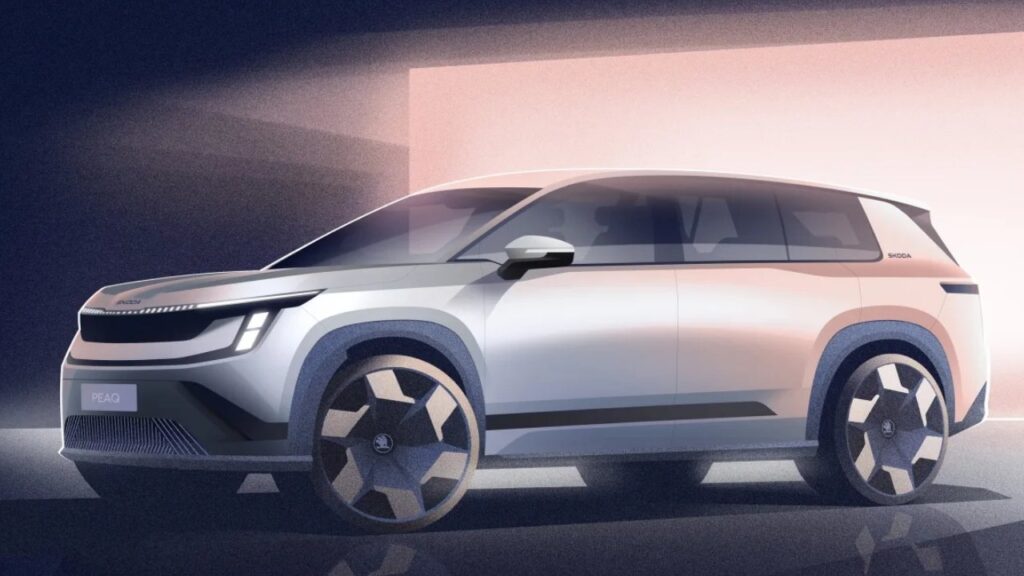
The rear gets T-shaped LED taillights that enhance rear visibility for nighttime driving; SKODA lettering on the tailgate for branding; a powered minimalist tailgate to make the rear view uncluttered and also help in easy loading and unloading; an extended roof spoiler to improve flow; and a higher-mounted brake to help in alerting drivers behind it that it is slowing down. It is 4,874 mm longer, and the distance between the axles measures 2,965 mm.
Shifting focus to powertrain and performance. They will launch it with a single-motor RWD and double-motor AWD drivetrain. The rear-wheel drive generates the power of 150 kW (204 hp) with the standard battery pack, but the larger one does 210 kW (286 hp), which takes 7.1 seconds to 8.6 seconds to accelerate from 0 to 100 km/h, and the all-wheel drive delivers 220 kW (299 hp), which helps it to sprint from 0 to 100 km/h in just 6.7 seconds.
The two NMC (Nickel Manganese Cobalt) battery packs it offers are 63 kWh and 93 kWh, giving the WLTP range of 460 kilometres and 600 kilometres, respectively. Reportedly, the car with the standard battery pack supports a DC charger up to 160 kW, but with a larger one, it does 195 kW. With the maximum DC (direct current) charger up to it, it takes 27 minutes for 10-80% charging.