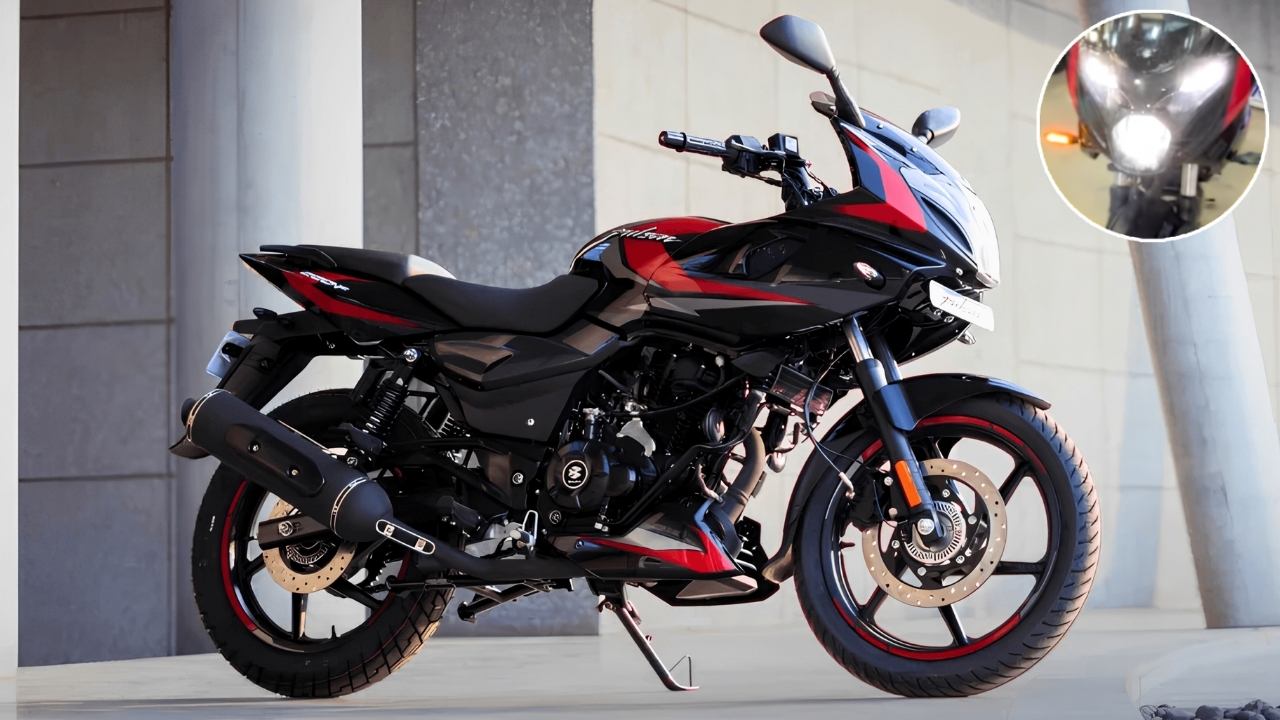
After the December 2025 upgrades, Bajaj Auto has again come up with a change in the Bajaj Pulsar 220F, a sports bike. On June 18, 2026, after a long wait, the two-wheeler and three-wheeler manufacturer launched the model with full LED lighting. It is set to be known as the 2026 model; they have introduced it into the domestic market with the ex-showroom price of 1.36 lakh rupees.
Compared to the existing one, the newly introduced model is just 8,000 rupees. Upfront, it now gets LED headlights with integrated LED daylight running lights, replacing the old halogen setup, and even the front-end and rear indicators are now LED. Besides the lighting changes, the motorcycle remains the same dimensionally, structurally, mechanically and even in other terms.
With the LED headlights and daylight running lights upgraded, the motorcycle looks different from the front. The change in the front-end lighting has made it more appealing to buyers. The manufacturer introduced this motorcycle back in July 2007 as the Pulsar 220 DTS-FI; since then, its style has remained unchanged in terms of design.
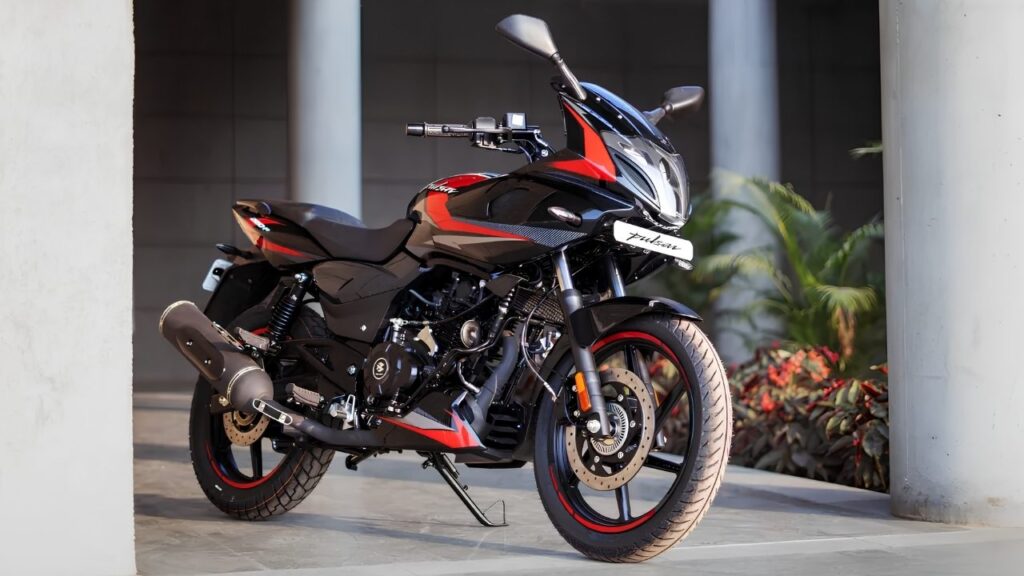
Even after discontinuing it, they reintroduced it to the Indian market back in February 2023. Interestingly, they didn’t make any changes to its styling. Now, almost 19 years have passed since the company debuted it, and this is the first time when its front-end look has got a modern upgrade, thanks to the LED headlight setup.
The 2026 model of the Pulsar 220F is also made available for sale in five colour options: black gold, black cherry red, black ink blue and black copper beige. Dimensionally, it is 2,035 mm longer, 750 mm wider and 1,165 mm taller.
The wheelbase of 1,350 mm is good for providing stability at high speed, and a ground clearance of 165 mm makes it compatible with Indian road conditions, because with this ride height, this bike can easily pass the road potholes and speed breakers.
It comes with a seat height of 795 mm, which gives comfortable riding to individuals with heights between 5’7” and 5’10”. The seat is quite long with soft-touch material upholstery for better sitting comfort for both driver and pillion. Its kerb weight is 160 kg, which is moderate for a 220 cc bike to provide good highway stability and better crosswind resistance.
The dashboard has a semi-digital instrument console which supports wireless connectivity via Bluetooth for turn-by-turn navigation, call alerts, and SMS alerts; and it shows some crucial information such as the speedometer, odometer, trip meter, fuel gauge, clock and distance-to-empty.
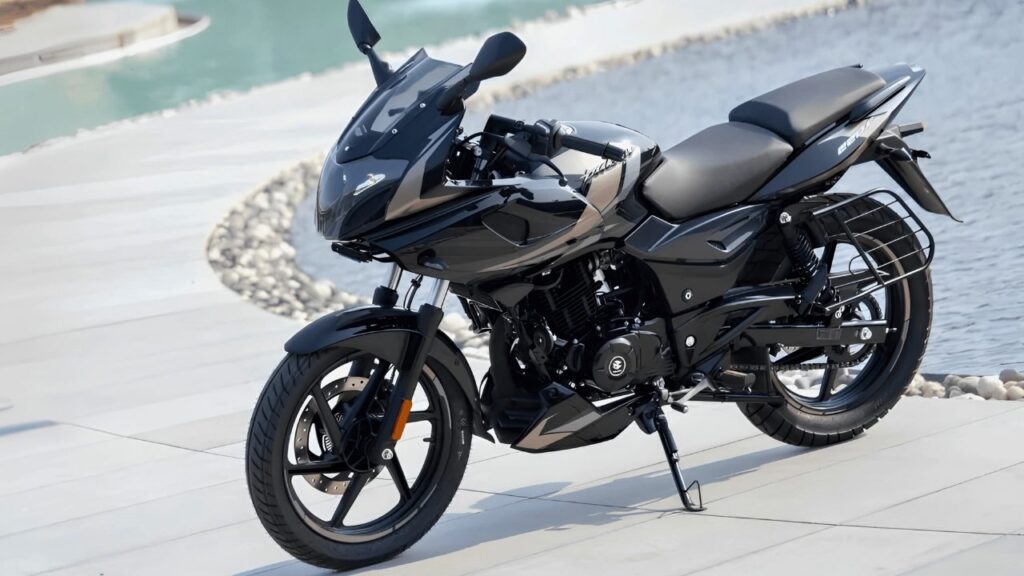
The motorcycle is built on a tubular dual-cradle frame, whose front suspension is telescopic forks, and the rear is 5-step adjustable twin gas-charged shock absorbers. Equipped with 17-inch alloy wheels with 90/90-17 front and 120/80-17 rear tyres.
The 260 mm disc manages front-wheel braking, and the 230 mm disc does the same for the rear wheel. It also features single-channel ABS (anti-locking braking system), meaning only the front wheels get ABS, which prevents the front wheel from locking up in case of sudden braking.
Features a 220cc, 2-valve, single-cylinder, twin-spark FI, oil-cooled petrol-powered internal combustion engine that is mated with a 5-speed constant-mesh gearbox featuring chain drive. The ICE generates the power of 20.4 PS at 8,500 rpm and a peak torque of 18.55 Nm at 7,000 rpm.
In order to accelerate from 0 to 100 kmph, it takes a time of 4.2 seconds, and the maximum speed this motorcycle can reach is 135 kmph. Its ARAI-certified mileage is 40 kmpl, and with a fuel tank of 15 litres, it gives a claimed range of 600 km. The real-world range depends on driving conditions and weather; with ideal conditions, it may run up to 520-550 km without any fuel stops.