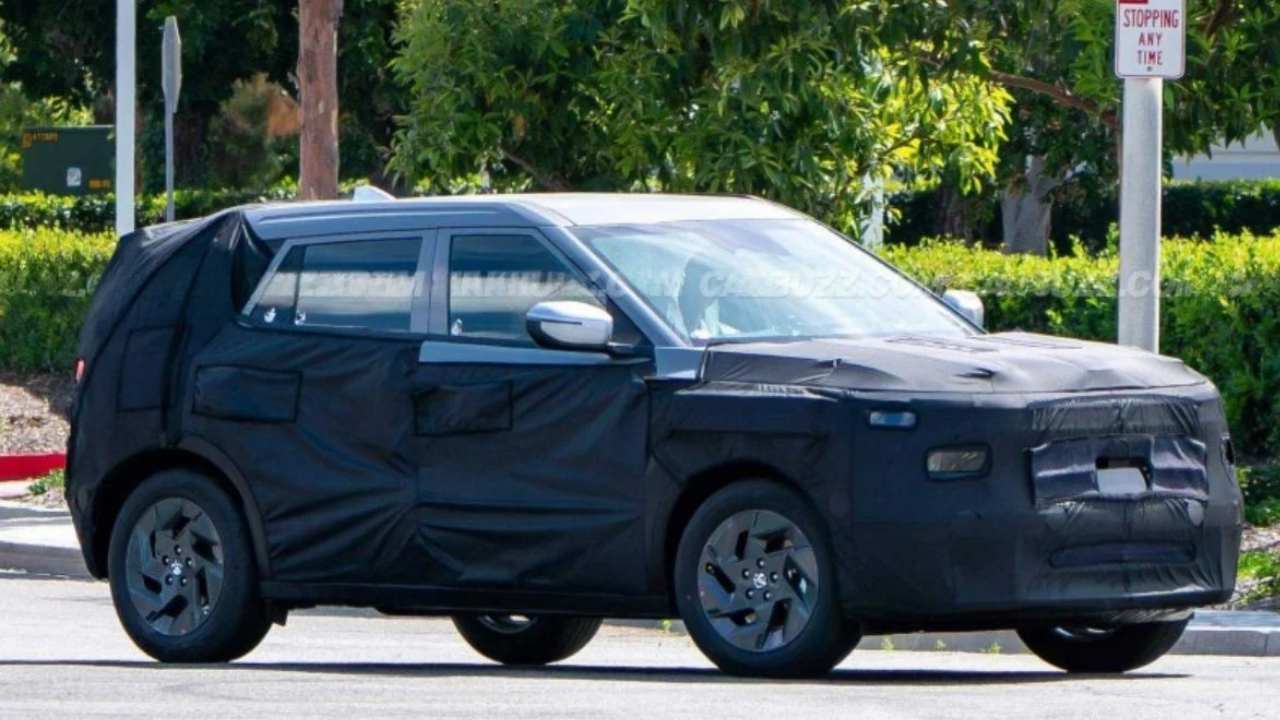
The third-generation Creta from Hyundai Motors was spotted testing in the United States, which was highly camouflaged but still revealed a few details about its exterior. At first sight, it is clearly visible that it has a longer and wider body compared to the outgoing model, which further improves its road presence.
The car has a boxier and more upright stance, meaning it is less rounded than the current version. Now, it gets rectangular headlamps, a flatter bonnet and bigger alloy wheels, which give it the looks of a proper SUV and less of a crossover. It gets dual-tone ORVMs with indicators and a slightly tapering roofline with the shark fin antenna.
The third-generation Hyundai Creta is set to be based on the all-new K3 platform, which provides better safety and rigidity, improved ride quality and lower noise and vibration. Its launch in the Indian market is expected in the second quarter of 2027 in multiple variants, whose ex-showroom price may be between ₹12 lakh and ₹20 lakh.
Dimensions & Size
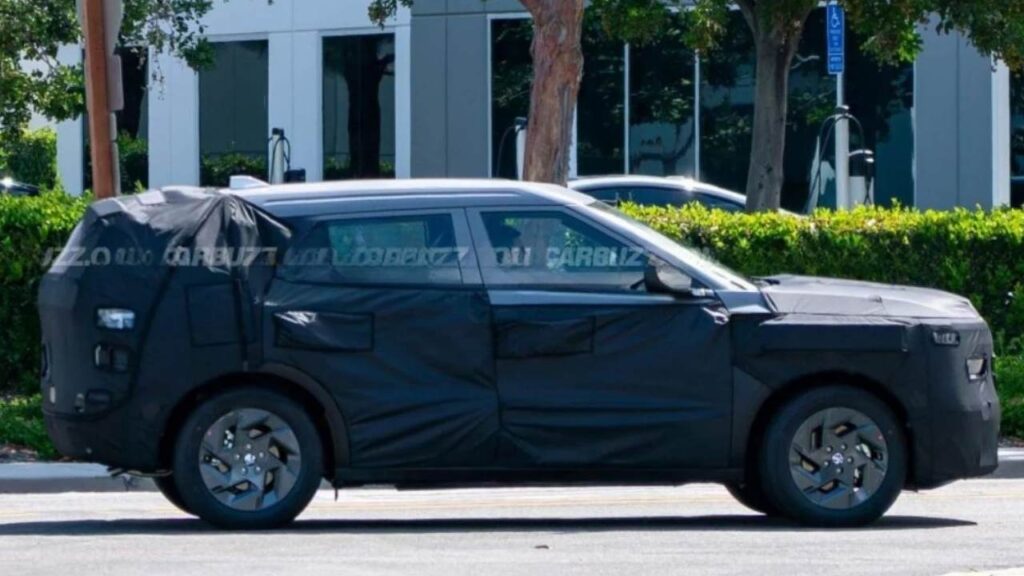
The Hyundai hasn’t yet revealed how long, wide and high the upcoming third-generation Creta will be. For reference, the 2nd-gen Seltos is also built on the K3 platform, which measures 4,460 mm, 1,830 mm and 1,635 mm in length, width and height, respectively; the 3rd-gen Creta is also expected to come with the same measurements.
The outgoing Creta model has a length of 4,330 mm, a width of 1,790 mm, and a height of 1,635 mm, meaning the upcoming one is 130 mm longer and 40 mm wider. The wheelbase in the upcoming vehicle is expected to be 2,690 mm, but in the current model it is only 2,610 mm; with 80 mm more wheelbase, the rear seating passengers will get better legroom.
Seating Capacity & Boot Space
The third-generation Creta is set to be introduced with a seating capacity of 5 people in a layout of 2 and 3, the same as the outgoing one, but with more length and width; the upcoming one will have a more spacious cabin and comfortable seating, as the rear seating passenger is now going to get better shoulder room.
The boot space in the existing model is 433 litres, which is capable of easily carrying 3-4 pieces of luggage depending on size. As the new one is going to be larger in size, it is certain that it will feature a more generous cargo area, maybe around 600 litres. If that happens, then it will be more convenient for families to carry luggage.
Features & Technology
The cabin is set to be equipped with a large infotainment touchscreen, which will also act as a control panel of the interior, as there will be only a few physical buttons. The instrument cluster, i.e., the driver display, is also expected to be updated with a better user interface. For connectivity, it is certain to get Android Auto and Apple CarPlay.
The steering wheel is likely to come with the brand’s four-dot logo. Seats in the second row are expected to come with boss mode, which enables control of the front seat from the rear, and a headrest. The front seats are expected to be ventilated, and the rear seat will get a separate AC vent for cooling. Another most likely feature is Level 2 ADAS.
Powertrain & Performance
No changes in engine options are expected. It will come with the same options that are offered with the existing model, which are 1.5L NA Petrol, 1.5L Turbo Petrol and 1.5L Diesel. They all come with an FWD drivetrain, but the transmission options for the first one are 6MT and IVT (CVT); the second is only 7-speed DCT; and the third are 6MT and 6AT.
The power output and peak torque of the 1.5L Naturally Aspirated petrol engine are 115 PS and 144 Nm; the 1.5L turbo petrol engine is 160 PS and 223 Nm; and the 1.5L diesel engine is 116 PS and 250 Nm. The fuel efficiency for a petrol engine is 17-18 km/l, for turbo petrol is 18 km/l, and for a diesel engine is 19-21 km/l.