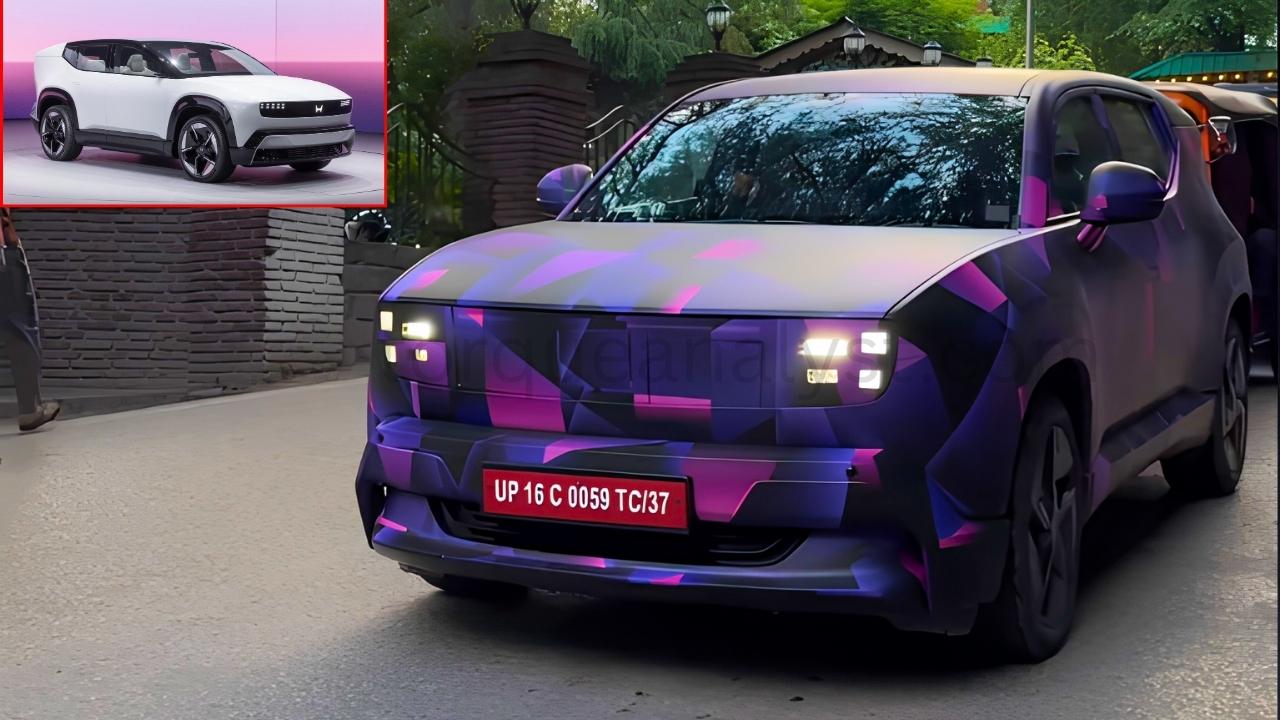
Honda Cars India, the Indian subsidiary of Honda Motor Company, has started testing the first electric vehicle for India. It is based on the Honda 0 Alpha EV concept, showcased at the Japan Mobility Show 2025 back in October 2025. Recently, it was spotted testing in Manali; the spy shots of the test mule have now revealed its interior.
Inside, it is set to get a landscape-oriented floating touchscreen infotainment system running on an Android-based operating system; it will support connected car technology with hundreds of remote features, over-the-air software updates to keep the infotainment system upgraded with the latest version, and an AI-based voice assistant that will do things over voice commands.
The infotainment system is set to be integrated with the premium sound system to enhance the information experience. To stream audio or video wirelessly, it is set to feature wireless Android Auto, wireless Apple CarPlay, and Bluetooth. Another thing that is visible inside the cabin in the spy shots is a slim fully digital instrument cluster under the steering wheel showing all the driving data in clear and clean fonts.
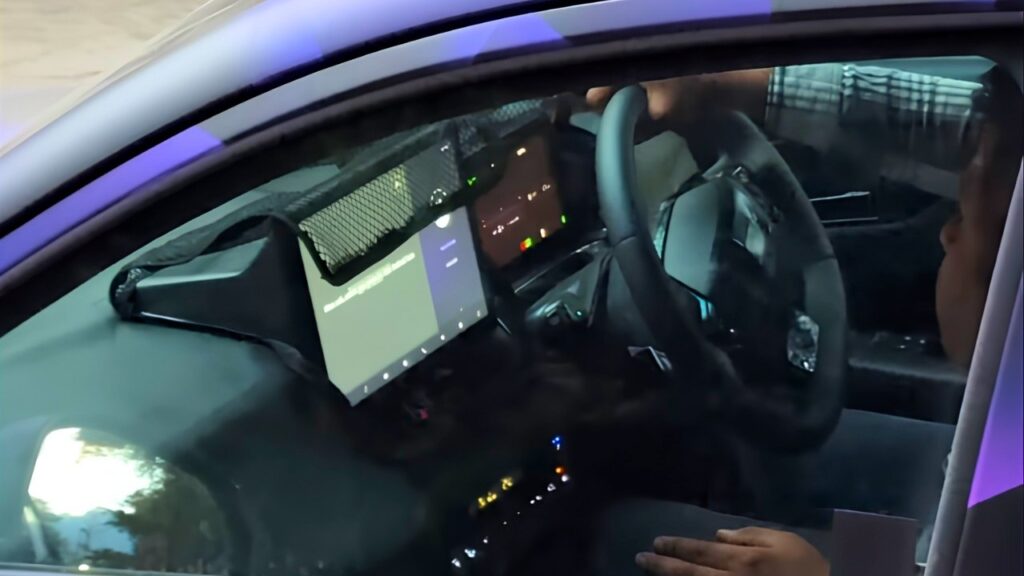
Interior spy shots also reveal that there are a few physical buttons below the infotainment system; however, it is not clear which controls they are. It seems that these buttons are for volume and climate. The images clicked during its spotting include not only interior but also exterior spy shots.
Notably, in the images, the exterior is highly camouflaged like previous sightings; however, it confirms the details that we got to know through the old spy shots. Upfront, it features an upright stance, squared-off proportions, rectangular LED headlights, and a closed-off grille. At the front end, it is likely to get full-width daylight running lights and a rugged bumper.
The spy shots show a clear side profile and a direct hint towards the flush-type door handle for the front door, and the handle for the rear door is visible on the C-pillar. Other things that are clearly visible on the sides are rugged wheel arch cladding, large alloy wheels, and front-door integrated ORVMs, which are highly anticipated to be electrically adjustable and foldable.
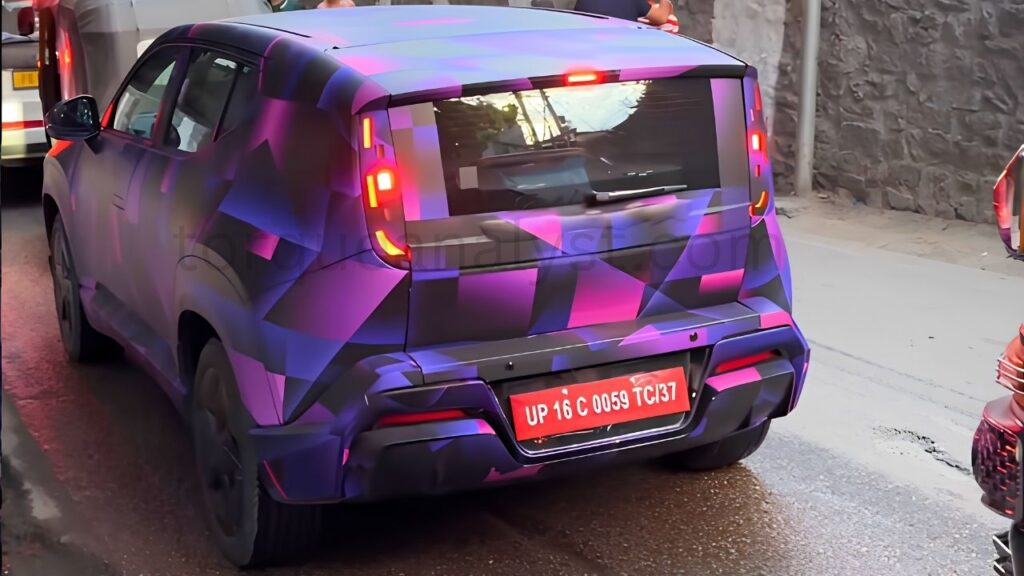
The rear gets a roof-mounted spoiler above the rear windshield with the braking light, vertically stacked taillamps, a clean tailgate for the uncluttered view, and a rugged and bold bumper with a side reflector.
Built on a dedicated battery-electric skateboard platform, its powertrain and performance details are still pending. Set to get a permanent magnet synchronous motor on the front axle, featuring a front-wheel drive drivetrain. The motor will be mated with a single-speed automatic transmission.
The carmaker may introduce the vehicle in the Indian market with two lithium-ion battery pack configurations, which may be between 60 kWh and 80 kWh. It is expected that the ARAI-certified range will be around 550 km and will support fast DC charging, which may add the range more than 200 km to the range within just 15 minutes of charging.
Its dimensions are still undisclosed; the length is anticipated to be above 4.2 meters with a wheelbase of 2.8 meters. It will come with a seating capacity of 5 people in a 2-3 layout, two separate seats in the front row for the driver and co-passenger, and three seats in the second row in a bench-like structure.
Because of the upfront stance, it is expected to have a large boot space, which may be capable of carrying up to 4 big pieces of luggage. Like other sport utility vehicles in the segment, it will also feature foldable seats, so when required, big luggage can be conveniently carried out.
Nothing about its launch is officially confirmed. Honda Car India is expected to unveil it by late 2026, and its launch in India may take place in early 2027. Following its introduction, it is anticipated to give tough competition to the Hyundai Creta Electric, the to-be-launched Tata Sierra EV, the Mahindra BE 6, the upcoming MG S5 EV, and the Maruti Suzuki eVitara.