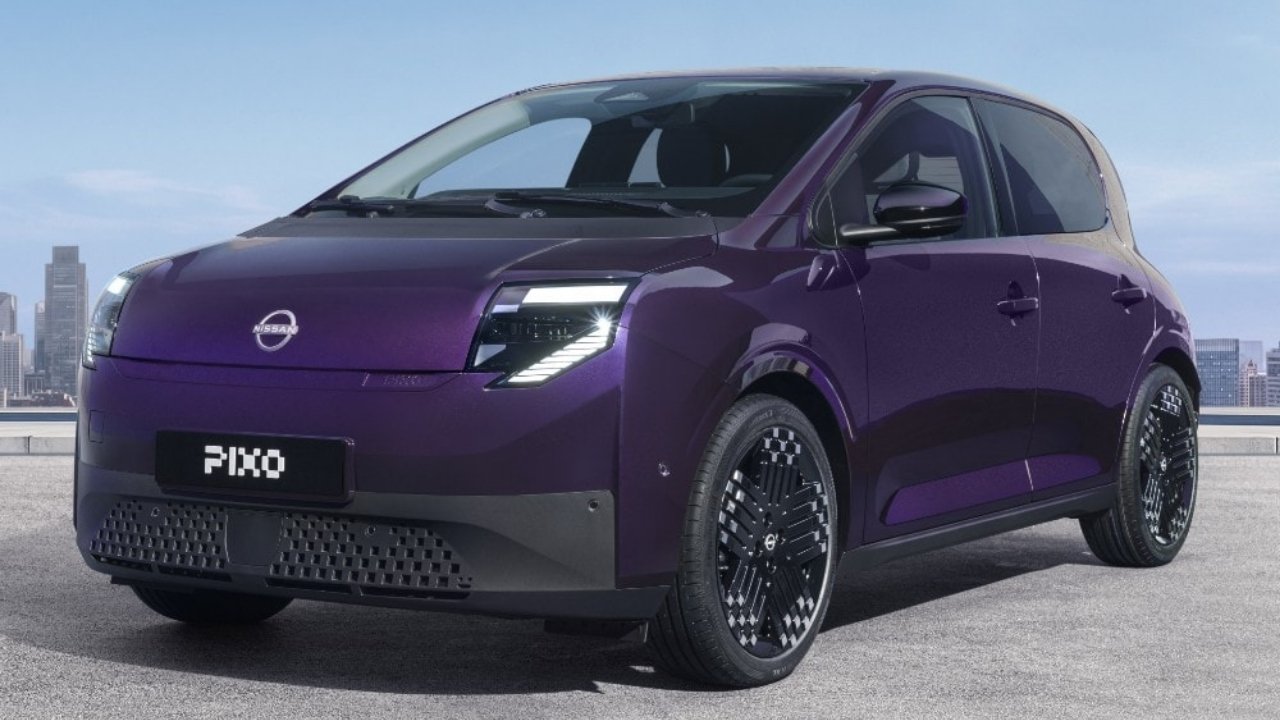
On September 24, 2026, Nissan, the Japanese automobile manufacturer, officially unveiled the Nissan Pixo, a city electric car, which will be positioned in the A-segment to compete with the rivals in the European countries. It has been designed with the collaboration between Nissan Design Europe and alliance partner Renault, at the Renault’s Novo Mesto facility, Slovenia.
It will go on sale across Europe with a single battery pack for city driving. The company says that it has a seating capacity of 4 people in a 2-2 layout, meaning two people can sit on the front row, one driver, and a co-passenger; and the second row also has two seats, but it is joined in the bench structure. The second row can easily accommodate two adults or three teens comfortably.
Compact size and modern design.
The length and width of the Nissan Pixo are officially unveiled; it is 3,796 mm longer and 1,790 mm wider. Even though the manufacturer has disclosed the turning radius, it is 9.9 meters. Outside it has Pixel-inspired lighting giving a modern lighting signature and better visibility for nighttime driving, and the distinctive “robot face” front bumper further adds modernness to its exterior look.
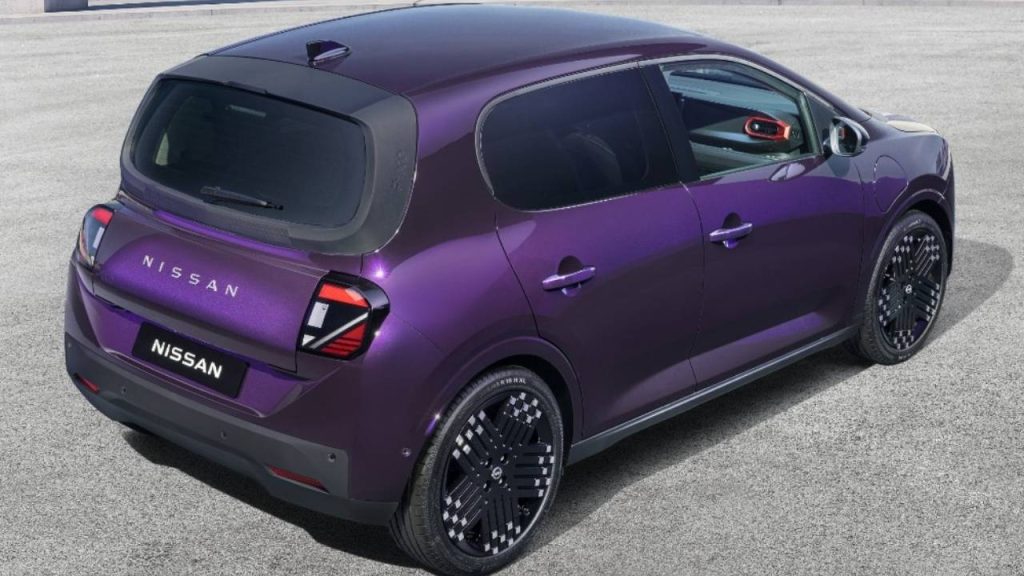
The Cube-inspired body shape is clearly visible from the side; 18-inch alloy wheels with the Pixel-like detailing are standard for this city electric car; they are bracketed by the pronounced wheel arches. The door handles are pull-type, and outside rearview mirrors are placed on the A-pillar. Other highlights from the exterior are vertically oriented taillamps and Nissan lettering on the tailgate.
Multiple color options and decent cargo capacity.
Wonder Purple and Gear Blue exterior color options are disclosed, meaning that Nissan will launch the Nissan Pixo in European countries with these two color options providing choices to buyers. Its wheelbase and height are yet to be disclosed; these details will be made public with the launch. Its wheelbase is anticipated to be similar to the Renault Twingo, as per many reports.
The boot space of 356 liters is confirmed officially behind the second row; this size is huge for a city car. Its cargo capacity can be used to easily accommodate two big pieces of luggage. The charging cable storing space is also in the boot; when it is stored, it reduces the cargo space by just 50 liters. The remaining space of 306 liters is also enough space to carry small luggage for four people.
One LFP battery pack option and excellent top speed.
Nissan says that the Nissan Pixo has a permanent magnet synchronous motor; it is available on the front axle, which is why it’s a front-wheel-drive city electric car. The FWD layout makes it ideal for city driving. The PMSM that is present under the hood is bolted with a 1-speed automatic reduction gearbox; it gets power from a 27.5 kWh lithium-ion battery that is placed beneath the floor.
Getting the power from the battery pack, the motor delivers 60 kW (82 PS) power and 175 Nm, making 0 to 100 kmph acceleration possible under 12.1 seconds and helping it to reach the maximum speed of 130 kmph. These performance figures are claimed by the company. The carmaker also says that after each full charge, this electric car can run up to 259 km in WLTP condition.
The real-world range will vary based on driving style and road condition. Nissan has also officially revealed the details regarding the charging; they say that its electrical architecture is 400 volts and can support a DC charger up to 50 kW that takes 28 minutes for 15 to 80 percent charging. Alternatively, with an 11 kW AC charger, it takes only 3 hours.
Large touchscreen and smart safety features.
Inside the cabin, the dashboard has two displays. The 7-inch unit is placed behind the steering wheel; it is a digital instrument cluster that shows all the driving data, and a 10-inch touchscreen infotainment system is available just above the center console that supports audio and video streaming and also acts as a control panel because most settings inside the cabin are touch-based.
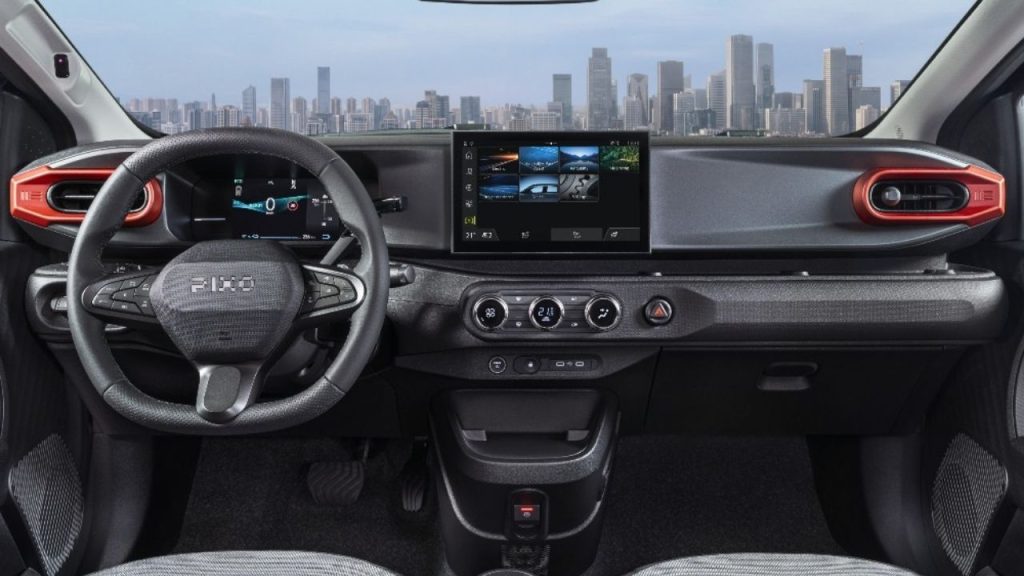
Other interior features include dual-tone fabric seats for enhanced aesthetics and individually sliding rear seats for practical seating. The company also confirms that the centrally mounted screen has Google built-in and Google Gemini in 14 different languages, the MyNissan app, and Face ID driver recognition. It also comes with ADAS with three key features: adaptive cruise control, lane-departure warning, and hands-free parking.
